Real classrooms · real students
The AiStoryLab
Write and illustrate your own LOEP episode with AI. Watch the lesson, study the guides, then make your case in the Story Studio: a chat that plans it with you, one question at a time.


 From our live classes
The lesson
Loads YouTube (uses data). Or tap a chapter to jump in.
Chapters
AI Storytelling: 0 to 100 in 60 Minutes
William Moore, AI Story Lab
Learn how AI 'thinks', why it can't write a whole novel in one go, how a context bible works, how LOEP's episode structure works, and how to write and illustrate your own episode, one section at a time.
Basic AI Literacy for Writers
Make your case and get certified
Everything in the AiStoryLab builds to one case: a LOEP story set in your own school, with you and your best friend as Kay and Ash, planned, written and illustrated with AI in the Story Studio. Pass the AI quiz and the review, and you earn the Certificate in Basic AI Literacy for Writers.
The League of Extraordinary Prefects
Certificate of Authorship
Certificate in Basic AI Literacy for Writers
This certifies that
Your name here
wrote and illustrated the case “Your case title” with AI, and showed their work.
What you get
- A certificate anyone can checkEvery certificate carries a code that schools, scholarship panels and employers can verify on this site.
- Real editorial reviewLeague staff read your story and the prompts behind it, the way an editor would.
- A shot at the BulletinStandout cases can be featured on the site (first name and school only, with your permission).
- Want to go deeper?Advanced AI Literacy for Writers is a separate course on PxLabs. You don't need this one first: take it before, after, or on its own.
Study the samples
Open them before you start. They show what a strong case looks like: a villain sheet, the 13 beats planned with AI, then the finished story with its illustrations. The Studio chat asks for each part in the same order.
- Planning guidePlanning templateA planning sheet in the shape of a case: your villain sheet, then a line for each of the 13 beats. Fill in a copy to plan before you open the Studio chat.Open ↗
- Plot samplePlot sample: Tales of VampquitoA finished plot breakdown: how the villain was designed, then every beat planned with AI. This is what a strong plot looks like.Open ↗
- Story sampleStory sample: The Great RuminatorA complete LOEP episode, written scene by scene. Match its shape: short chapters, a hook in every scene, real science doing the work.Open ↗
How it works
- 1Get your place: buy the certification in the Story Studio, or get a certification code from a mentor (your teacher, tutor or a facilitator from the directory).
- 2Open the Story Studio chat. Set the case in your school, cast yourself and your best friend as Kay and Ash, and design a villain whose weakness is real science.
- 3The chat asks one question at a time: the science, your plot and its beats, the pictures you'll need, the art style, the boss fight and the cover. A progress bar shows how far you are.
- 4Fill it with your own place: languages, food, festivals, folklore. Plan each answer with the guides and samples above.
- 5Take the AI quiz in the Studio: 60 questions in 60 minutes.
- 6Then illustrate your story with AI, right there in the Studio, and hand it in: no links to share. League staff review it, your mentor is named on it, and your certificate is issued.
The method
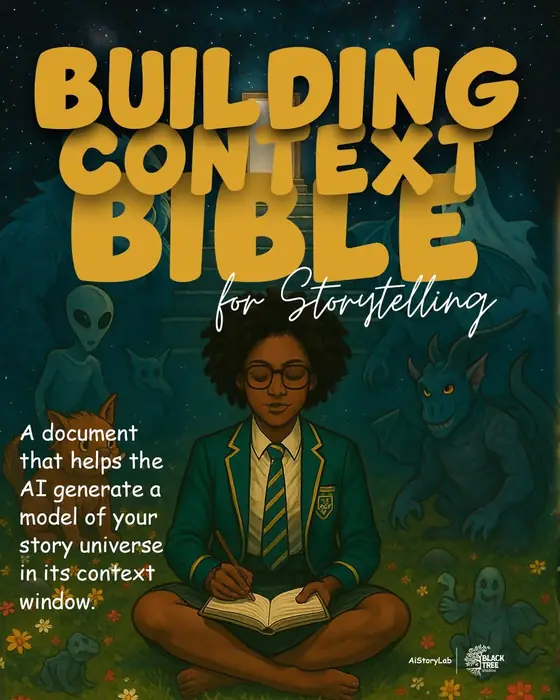
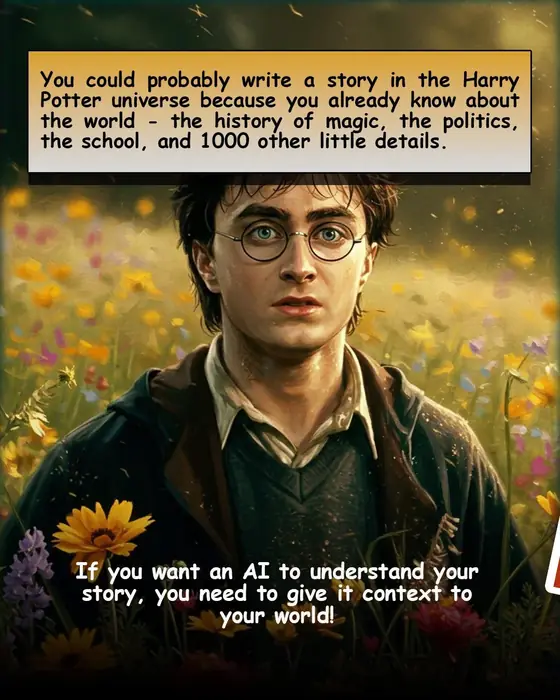
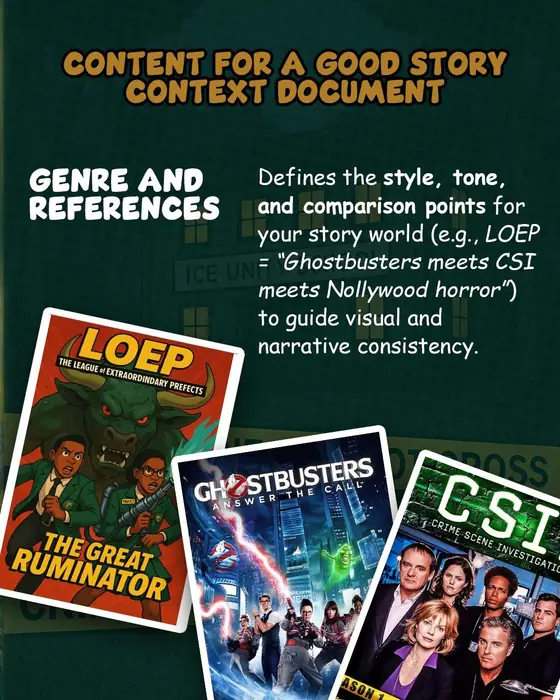
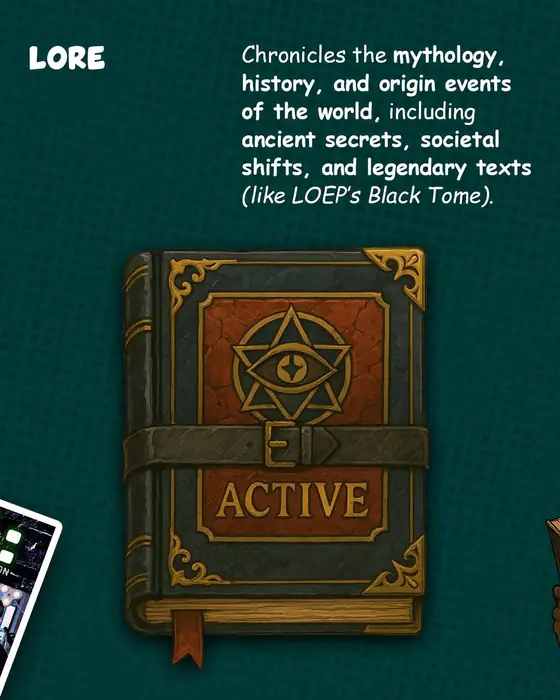
Building a context bible
Before AI writes a word, you decide who your characters are, what your world allows and how your monster is beaten. These are the slides from the class.
Swipe the slides →
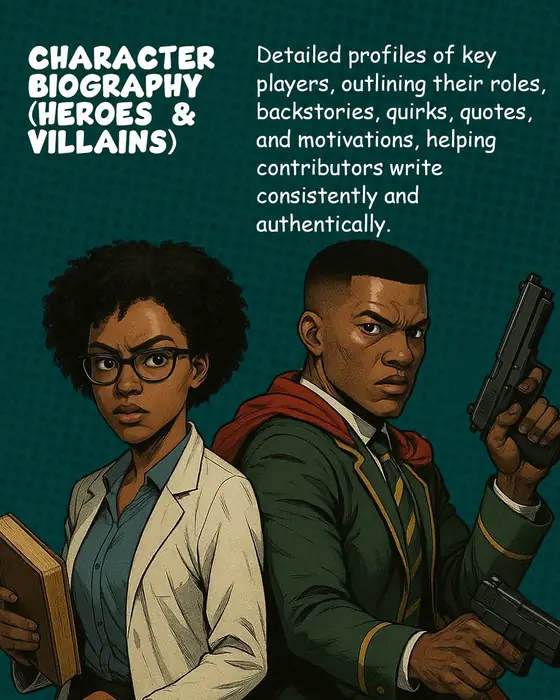
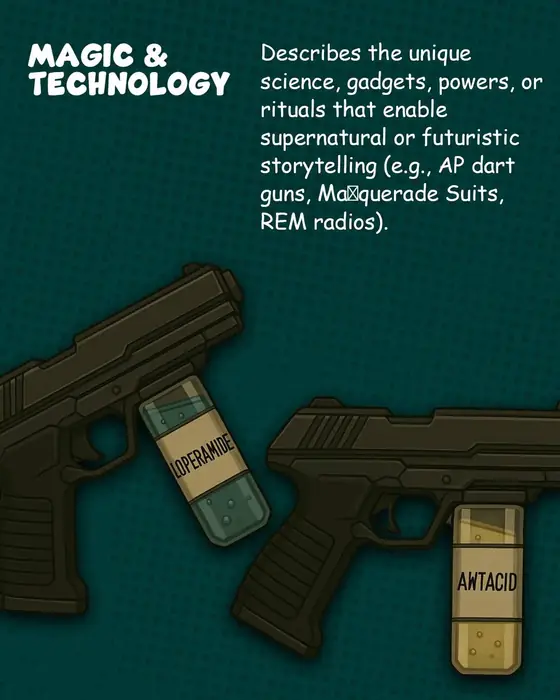
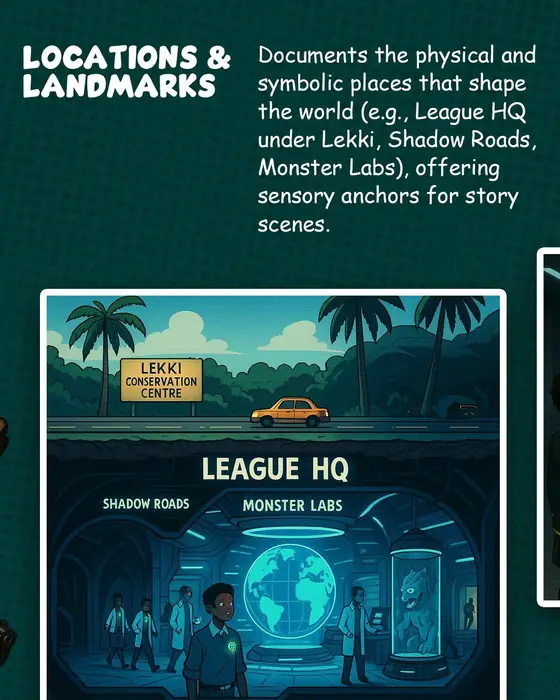
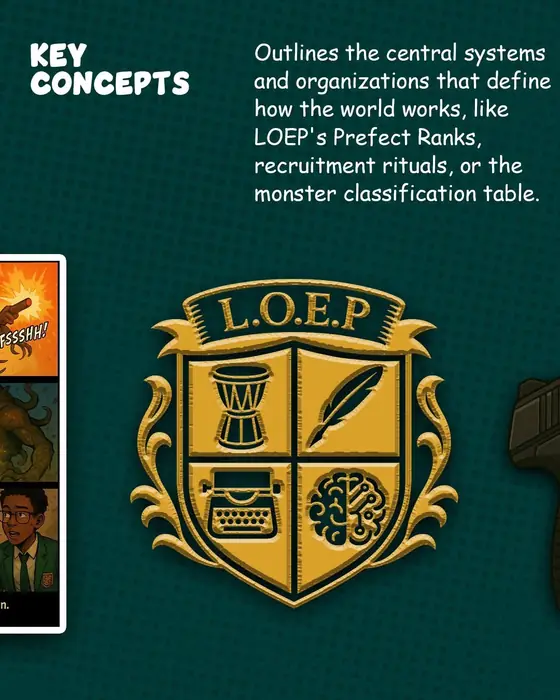
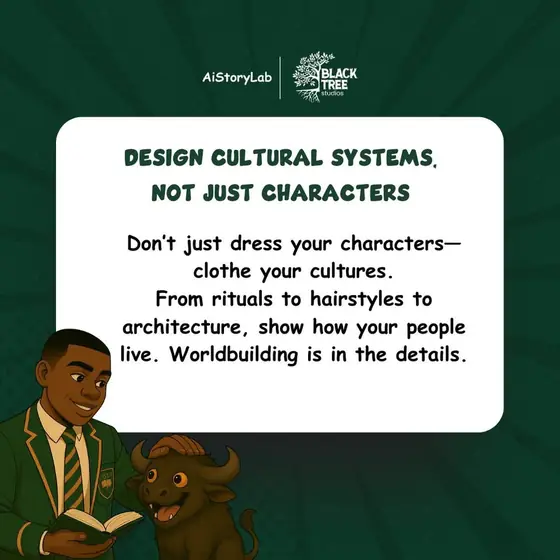
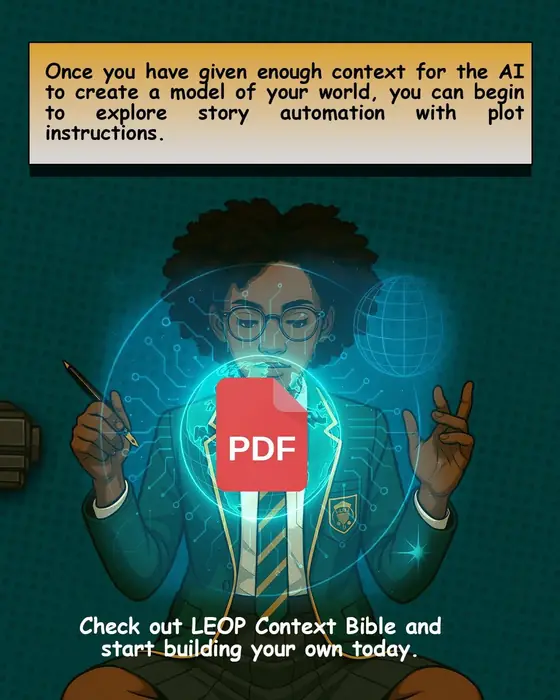
Built your bible? Bring it to the Story Studio: the chat turns it into your case, question by question, and that's where it's certified.
Start your certification ▶Make your own episode: step by step
Step 0
Watch the lesson
Watch the lesson above, or jump to a chapter. It shows how AI writing works and how a LOEP episode is built, from the context bible to the comic.
Step 1
Study the world
Read the Worldbuilding Guide: the League, the ranks, the gear, the monsters. This is the 'context bible': it's how an AI knows who Kay and Ash are, and how your case will fit their world.
Step 2
Plan your villain and your plot
Use the Plot Guide to design your villain (name, powers, habitat, a weakness that is real science) and sketch the 13 beats of your episode. Check your science in the Villain Builder.
Step 3
Learn how the prompts work
Read the Prompt Library and see how each prompt gives the AI the world, the plot and one section at a time. This is the Fractal Method: the Studio uses the same idea.
Step 4
Plan your pictures
Use the Illustration Guide to plan your comic: two to four panels per section, each described before it's drawn. No pictures of real people, including you.
Step 5
Make it in the Story Studio
Open the Story Studio. The chat asks one question at a time (your science, plot, pictures, style, boss fight and cover), with a progress bar so you always know how far you are. Everything is saved as you go.
Step 6
Illustrate it and hand it in
For your certificate: take the AI quiz, then illustrate your story with AI right there in the Studio and hand it in. No links to share. For the free League editorial: hand in through the same chat, with a link to your pictures at the end.
Guides to help you study and plan
Read these before you start, and keep them open while you plan in the Story Studio chat. Want to fill one in? Make your own copy (File → Make a copy).
Worldbuilding Guide ↗
The context bible: the League, ranks, gear, monsters. Study it so your case fits Kay and Ash's world.
Plot Guide ↗
How to design a villain on real science and plan the 13 beats of an episode. Use it to plan before you open the Studio chat.
Illustration Guide ↗
How to plan comic panels and describe a picture before you make it. Use it for the Studio's pictures and style questions.
Prompt Library ↗
Every prompt from the lesson: study how each one is built, then write your own in the Studio.
Full course · on PxLabs


Advanced AI Literacy for Writers
On PxLabs: plot, character, world-building, illustration and monetisation, each taught with AI, built from the six-module programme William designed for Africa No Filter. For older students, teachers and adult writers.
Advanced AI Literacy for Writers is a separate course on PxLabs. You don't need this one first: take it before, after, or on its own.
Take the course on PxLabs ↗Advanced AI Literacy for WritersFull course6 modulesFor parents
AI lessons for your child
Looking for somewhere your teenager can learn AI properly, not just copy answers from it? L.O.E.P teaches 13–18 year olds how AI works and how to create with it, through science stories they already love.
- Where can my child learn AI in Nigeria?
- Right here, online, from any phone. Start with the free AiStoryLab lesson on L.O.E.P (about an hour): how AI writing works, how to brief it well, and how to write and illustrate a comic episode with it. Your child can then take the Story Studio certification, and the AI dictionary explains every term along the way.
- What age is it for?
- Secondary school students, ages 13 to 18. Children under 18 need a parent or guardian's permission to make an account, and we never ask a child for a phone number or contact details.
- What will my child actually learn?
- How large language models work, prompting and context (writing a 'context bible'), planning a story in 13 beats, writing with AI without letting it take over, illustrating with AI, and using AI responsibly: fact-checking, privacy and Nigerian data law. It's taught through LOEP's science adventures, so it supports their Biology, Chemistry and Physics too.
- Is there a certificate?
- Yes. The Story Studio certification (₦20,000) includes two practice runs and the exam: your child writes and illustrates their own LOEP case with AI and shows their prompts. League staff review the work, and the Certificate in Basic AI Literacy for Writers carries a code anyone can verify.
- Is it safe for my child?
- There are no ads and no third-party trackers. Students use a codename, never their real name. Every prompt and picture in the Story Studio is screened, and staff review work before anything is published.
- Can my teen learn to build apps with AI?
- That's next. We're preparing hands-on courses on building real apps and games with AI coding tools such as Claude Code. A parent can join the AI builders list below to hear first.