15 wks to JAMB

L.O.E.P · PhysicsNo. 10

Explainer · Electrical energy and power · about 15 min

Why does the pressing iron finish your prepaid units faster than every bulb in the house?

Watch the lecture

Ash and Kay teach this lesson, start to finish.

⬇ Save for offline

Keeps it on this phone, so it plays with no signal and no data, at this same address.

In short

The key words in this lesson, in plain English:

Power:
How fast work is done or energy is transferred: power = work ÷ time, in watts (W). 1 W = 1 J every second.
Watt:
The unit of power: one joule of energy used or given out each second. 1 kW = 1000 W; 1 MW = 1 000 000 W.
Joule:
The unit of work and energy: the work done when a force of 1 newton moves something 1 metre. 1 kJ = 1000 J.
Heating effect of a current:
A current flowing through a resistance turns electrical energy into heat: H = I²Rt. Twice the current gives four times the heat.

Free this month: 1 of 1 lessons. A free account gives you 3 a month.

Load ₦5,000 on a prepaid meter and the units can last a week or vanish in days. The bulbs, the fan and the TV hardly move it; the pressing iron, the water heater and the AC eat it. What the meter counts is energy, and how fast an appliance uses it is its power. Learn the two and you can read any appliance label, any bill and any exam question on this topic.

Kay:My mum irons the whole family's clothes on Sunday night. Ash says that's why the meter beeps on Monday morning.
1

Play · run it

A watt is a joule every second

The pot needs 60 000 J (60 kJ) of electrical energy. Pick an appliance, set how long it runs, and hit the target.

Pick a power, set the time, then run

60 kJenergy
Power100 WTime30 sEnergy E = Pt0 J

Electrical energy and power

Where you see it: a 10 W phone charger and a 1500 W hair dryer plugged in for the same 10 minutes use very different amounts of energy: the dryer uses 150 times as much. PhysicsPowerHow fast work is done or energy is transferred: power = work ÷ time, in watts (W). 1 W = 1 J every second.A 2 000 W kettle boils water much faster than a 1 000 W one, because it gives the water energy twice as fast.Science dictionary ▶ is the rate of using energy: P = E/t, in PhysicsWattThe unit of power: one joule of energy used or given out each second. 1 kW = 1000 W; 1 MW = 1 000 000 W.Science dictionary ▶ (W); 1 W is 1 PhysicsJouleThe unit of work and energy: the work done when a force of 1 newton moves something 1 metre. 1 kJ = 1000 J.Lifting a 100 g mango through 1 metre takes about 1 joule.Science dictionary ▶ per second, and 1 kW is 1000 W. So the energy an appliance uses is E = Pt. A 1200 W kettle uses 1200 J every second it's on. The rating on an appliance's label, such as "1200 W, 230 V", is its power when it runs on that PhysicsPotential difference (voltage)The energy transferred per coulomb of charge between two points in a circuit, measured in volts.Mains sockets in Nigeria supply about 230 V.Science dictionary ▶.
2

Ash's lab

The heating effect of a current

A 6 Ω heating coil warms a cup of water by 8 °C. Choose the current and time how long it takes. Then try twice the current.

Set the current, then heat

25 °C
Current1.0 AV = IR6 VP = I²R6 WTime to warm–

Joule heating

Where you see it: the coil of an electric hot plate glows red because the PhysicsElectric currentThe rate of flow of electric charge, measured in amperes (1 A = 1 coulomb per second).A phone charger supplies a current of about 1 to 2 A.Science dictionary ▶ heats its high-PhysicsResistanceHow strongly a component opposes current: R = V/I, measured in ohms. It rises with length and falls with thickness of a wire.The coil in an electric iron has a high resistance so it heats up.Science dictionary ▶ wire. A current heats a resistor: the energy changed to heat is E = IVt = I²Rt = V²t/R, and the PhysicsPowerHow fast work is done or energy is transferred: power = work ÷ time, in watts (W). 1 W = 1 J every second.A 2 000 W kettle boils water much faster than a 1 000 W one, because it gives the water energy twice as fast.Science dictionary ▶ is P = IV = I²R = V²/R. Because of the I², twice the current gives four times the heat each second, so the water warms in a quarter of the time. Pressing irons, kettles, water heaters and toasters use a high-resistance PhysicsNichromeAn alloy of nickel and chromium with a high resistivity and a high melting point, used for the heating elements of irons, kettles and heaters.Science dictionary ▶ PhysicsHeating effect of a currentA current flowing through a resistance turns electrical energy into heat: H = I²Rt. Twice the current gives four times the heat.Science dictionary ▶ for this. Where the heat goes into water, set the electrical energy equal to mcΔθ.
3

Play · the prepaid meter

One unit is one kilowatt-hour

Switch appliances on, set the hours, and run the house. Use exactly 1 unit (1.00 kWh). There's more than one way.

Switch some on, set the hours, then run

0.00kWhimp/kWh
Switched on0 WHours1 hUnits used0.00 kWh

The kilowatt-hour

Where you see it: the energy label on many fridges and air conditioners gives the appliance's yearly use in PhysicsKilowatt-hour (kWh)The unit electricity is sold in, the meter's unit: the energy a 1 kW appliance uses in one hour. 1 kWh = 3.6 × 10⁶ J. Units = kW × hours.Science dictionary ▶, so you can compare models before buying. The electricity company sells energy in kilowatt-hours (kWh), which the meter calls units. One kWh is the energy a 1 kW appliance uses in 1 hour: 1 kWh = 1000 W × 3600 s = 3.6 × 10⁶ J (3.6 MJ). To find the units, put the PhysicsPowerHow fast work is done or energy is transferred: power = work ÷ time, in watts (W). 1 W = 1 J every second.A 2 000 W kettle boils water much faster than a 1 000 W one, because it gives the water energy twice as fast.Science dictionary ▶ in PhysicsWattThe unit of power: one joule of energy used or given out each second. 1 kW = 1000 W; 1 MW = 1 000 000 W.Science dictionary ▶ and the time in hours: units = kW × hours. A 200 W fridge running 5 hours uses 0.2 × 5 = 1 unit, the same as a 1000 W iron in 1 hour.
4

Work it out

The salon's bill

A hair salon runs a 1200 W dryer for 3 hours and six 50 W bulbs for 10 hours in a day. Electricity costs ₦70 per kWh. What does the day's electricity cost?

Step 1

    Cost of electricity

    Cost = units × price per unit, where units = PhysicsPowerHow fast work is done or energy is transferred: power = work ÷ time, in watts (W). 1 W = 1 J every second.A 2 000 W kettle boils water much faster than a 1 000 W one, because it gives the water energy twice as fast.Science dictionary ▶ in kW × time in hours. Work out each appliance (or group: six 50 W bulbs are 300 W) separately when they run for different times, add the units, then multiply by the tariff. The commonest mistake is leaving the power in PhysicsWattThe unit of power: one joule of energy used or given out each second. 1 kW = 1000 W; 1 MW = 1 000 000 W.Science dictionary ▶: 50 W is 0.05 kW.
    5

    Play · quick rounds

    Choose the fuse

    Press Next appliance

    –– W · 240 V?the plug's fuse
    Right0 / 4

    Fuses and circuit breakers

    Where you see it: when too many appliances run from one PhysicsHooke's lawA spring stretches in equal steps for equal loads: double the force, double the stretch (until it passes its elastic limit). F = ke.Spring balances, car suspension and mattress springs all rely on it. Bathroom scales turn a spring's squash into your weight.Science dictionary ▶, the breaker in the house's distribution board trips and cuts the PhysicsPowerHow fast work is done or energy is transferred: power = work ÷ time, in watts (W). 1 W = 1 J every second.A 2 000 W kettle boils water much faster than a 1 000 W one, because it gives the water energy twice as fast.Science dictionary ▶ before the wiring overheats. A PhysicsFuseA thin wire of low melting point fitted in the live wire. Too much current melts it and breaks the circuit before the cables overheat. Its rating should be just above the normal current.Science dictionary ▶ is a short, thin wire of low PhysicsMelting pointThe temperature at which a pure solid melts. Its liquid freezes at the same temperature: for water, 0 °C. Impurities such as salt lower the freezing point.Science dictionary ▶. If the PhysicsElectric currentThe rate of flow of electric charge, measured in amperes (1 A = 1 coulomb per second).A phone charger supplies a current of about 1 to 2 A.Science dictionary ▶ rises above its rating, it heats up, melts and breaks the circuit before the cable overheats and starts a fire. Choose the rating just above the appliance's normal current, I = P/V: a 960 W toaster on 240 V takes 4 A, so it gets a 5 A fuse, not a 13 A one. A PhysicsCircuit breakerA switch that opens by itself when the current is too large, protecting the circuit like a fuse, but it can be reset instead of replaced.Science dictionary ▶ does the same job with a switch that trips and can be reset.
    6

    Play · arcade

    Live wire or earth wire?

    Press Start

    Swipe left for the live wire, right for the earth wire

    Score0Streak0Lives♥♥♥

    House wiring and the three-pin plug

    Where you see it: a fridge or electric iron with a metal case comes with a PhysicsMains wiringThree wires: live (brown, at 230 V), neutral (blue, near 0 V) and earth (green and yellow, a safety path to the ground).Switches and fuses go in the live wire so an appliance switched off is really safe.Science dictionary ▶; the third, longest pin connects the case to earth. Three wires come to every socket. The live wire (brown; red in old wiring) is at the mains PhysicsPotential difference (voltage)The energy transferred per coulomb of charge between two points in a circuit, measured in volts.Mains sockets in Nigeria supply about 230 V.Science dictionary ▶, so the PhysicsFuseA thin wire of low melting point fitted in the live wire. Too much current melts it and breaks the circuit before the cables overheat. Its rating should be just above the normal current.Science dictionary ▶ and the switch go in the live wire: switched off, the appliance is cut off from the danger. The neutral wire (blue; black in old wiring) completes the circuit at about 0 V. The earth wire (green and yellow) joins the appliance's metal case to the ground: if a loose live wire touches the case, a large PhysicsElectric currentThe rate of flow of electric charge, measured in amperes (1 A = 1 coulomb per second).A phone charger supplies a current of about 1 to 2 A.Science dictionary ▶ rushes to earth and blows the fuse, instead of through you. Sockets and lamps are wired in parallel, so each gets the full mains voltage and works on its own.
    7

    Play · the national grid

    Why the grid runs at 330 kV

    A power station sends 50 MW along cables with a total resistance of 5 Ω. Choose the voltage it's sent at. Get the power wasted in the cables under 1%.

    Choose a transmission voltage

    stationtown
    Voltage11 kVCurrent I = P/V–Lost as heat, I²R–

    Power transmission

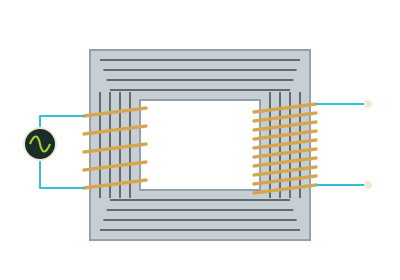
    Where you see it: the PhysicsTransformerA device of two coils on an iron core that changes the voltage of an alternating supply: Vs/Vp = Ns/Np.The transformer on an electricity pole steps high voltage down for homes.Science dictionary ▶ in a fenced enclosure on many streets is the last step down: it takes the 11 kV distribution line down to the PhysicsPotential difference (voltage)The energy transferred per coulomb of charge between two points in a circuit, measured in volts.Mains sockets in Nigeria supply about 230 V.Science dictionary ▶ your sockets use. For the same PhysicsPowerHow fast work is done or energy is transferred: power = work ÷ time, in watts (W). 1 W = 1 J every second.A 2 000 W kettle boils water much faster than a 1 000 W one, because it gives the water energy twice as fast.Science dictionary ▶, P = IV, so a higher voltage means a smaller PhysicsElectric currentThe rate of flow of electric charge, measured in amperes (1 A = 1 coulomb per second).A phone charger supplies a current of about 1 to 2 A.Science dictionary ▶. The heat wasted in the cables is I²R, so ten times the voltage cuts the loss a hundredfold. That's why Nigeria's grid carries power on 330 kV and 132 kV lines. Step-up transformers at the power station raise the voltage, and step-down transformers at substations bring it down, to 33 kV and 11 kV for distribution, then to about 230 V for homes.
    8

    Exam corner

    How the exam asks it

    The heating question, every part of it. Tap each step to reveal it.

    A kettle rated 1500 W, 250 V heats 1.2 kg of water from 30 °C to 100 °C. Find the heat needed, the time it takes (no heat lost), the current, and the resistance of its element. (Specific heat capacity of water = 4200 J kg⁻¹ K⁻¹.)

    Now try the real ones

    Real JAMB, WAEC and NECO past questions on this lesson (the JAMB and WAEC ones in LOEP's words). Answer them one at a time: each is marked, with the worked answer.

    Start the 10 real questions ▶
    1. JAMB 2022A heater element carries a current of 2 A when connected to a 12 V battery. How much electrical energy does it convert in 5 minutes?
    2. WAEC 2021A current of 3 A flows through a heating wire of resistance 5 Ω for 2 minutes. How much energy is dissipated as heat?
    3. JAMB 2020To reduce power loss in the cables, electricity from a power station is transmitted over long distances using
    4. WAEC 2019A bulb marked 60 W is working normally on 240 V mains. What is the resistance of its filament?
    5. JAMB 2019In house wiring, the bulbs in different rooms are connected in parallel mainly because
    6. WAEC 2019Which of these parts of a house wiring system does NOT act as a safety device?
    7. JAMB 2018A 20 W heater element has a resistance of 500 Ω. At what p.d. should it be operated normally?
    8. WAEC 2015Which statement about a three-pin plug is correct?
    9. JAMB 2018Why are the metal casings of household appliances connected to the earth wire?
    10. JAMB 2018An electric iron connected to a 20 V supply draws a current of 3 A. How much electrical energy does it convert in 4 minutes?

    Label it

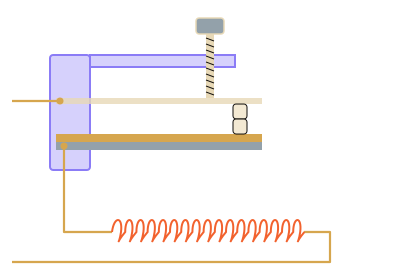
    The transformer that steps the grid's voltage up and down, and the thermostat that switches a pressing iron's heating element on and off, in the Label lab.
    9

    The League's test

    Pass the League's test

    Six exam-style questions from the League. Get all six right to earn your stamp. Three wrong and you resit.

    The League's badge

    League test · Electrical energy and power

    You: ♥♥♥

    Press Start when you're ready.

    Remember it

    Tap a card to flip it. Say the answer before you flip.

    Kay:That's electrical energy and power. I've worked out the Sunday ironing: 1 kW for 2 hours is 2 units. I've told my mum. She told me to iron my own clothes.
    Electrical energy and power: Physics explained, with games · L.O.E.P

