15 wks to JAMB

L.O.E.P · ChemistryNo. 08

Explainer · Chemical bonding · about 15 min

Diamond and pencil lead are both pure carbon. Why is one the hardest thing in nature and the other soft enough to write with?


Watch the lecture

Ash and Kay teach this lesson, start to finish.

⬇ Save for offline

Keeps it on this phone, so it plays with no signal and no data, at this same address.

In short

The key words in this lesson, in plain English:

Ionic bond:
The strong attraction between oppositely charged ions, formed when a metal gives electrons to a non-metal.
Covalent bond:
A bond formed when two atoms share a pair of electrons, usually between non-metals.
Metallic bond:
The attraction between a lattice of positive metal ions and the sea of delocalised electrons around them. It explains why metals conduct and bend.
Allotropy:
The existence of an element in different forms in the same physical state, such as diamond and graphite (carbon), or oxygen and ozone.

Free this month: 1 of 1 lessons. A free account gives you 3 a month.

Table salt melts at 801 °C. Candle wax melts in your hand on a hot afternoon. Diamond is the hardest thing in nature, yet the "lead" in your pencil, graphite, is pure carbon too, and soft enough to write with. The difference isn't the atoms. It's how they hold on to each other: the chemical bonds.

Kay:So my pencil and an engagement ring are basically cousins. One just went to a much better school.
1

Play · hand them over

Ionic bonding

Atoms are most stable with a full outer shell. Metals have a few outer electrons to lose; non-metals need a few to fill up. Tap each metal electron to hand it over. Make 3 compounds.

Tap a metal's outer electron

outer shells only
Compound–Made0 / 3

Ionic (electrovalent) bonds

Where you see it: the oral rehydration ChemistrySalt (in chemistry)The compound formed when the hydrogen of an acid is replaced by a metal or ammonium ion, as when an acid neutralises a base: sodium chloride, copper(II) sulfate.Science dictionary ▶ sold in every pharmacy contain ionic ChemistryCompoundTwo or more elements chemically joined in a fixed ratio, with properties different from the elements, such as water (H2O) or salt (NaCl).Poisonous chlorine and reactive sodium combine into the salt you eat.Science dictionary ▶ such as sodium chloride and potassium chloride; in water they split into Na⁺, K⁺ and Cl⁻ ChemistryIonAn atom or group of atoms with an electric charge, formed by losing electrons (positive cation) or gaining them (negative anion).Sports drinks replace sodium and potassium ions lost in sweat.Science dictionary ▶, which the body needs to replace after diarrhoea. A metal atom loses its outer PhysicsElectronA tiny negatively charged particle that moves around the nucleus of an atom. Moving electrons are an electric current.Rubbing a balloon on your hair moves electrons onto the balloon.Science dictionary ▶ to become a positive ion; a non-metal atom gains them to become a negative ion. Both end with a full outer shell, like a ChemistryNoble gasesThe Group 0 (Group 18) elements: helium, neon, argon, krypton, xenon and radon. Their outer shells are full, so they hardly react.Helium fills balloons, neon glows red in signs, argon fills light bulbs.Science dictionary ▶. The oppositely charged ions attract strongly in every direction, building a giant ionic lattice: sodium chloride is Na⁺ and Cl⁻ ions in a cube pattern. The total charge is zero, which fixes the formula: Ca gives away 2, each Cl takes 1, so CaCl₂.
2

Play · share them

Covalent bonding

Two non-metals both want electrons, so neither gives any away. They share pairs instead. How many pairs must each molecule share so every atom has a full shell? Get 3.

Set the number of shared pairs

–
Built0 / 3

Covalent bonds

Where you see it: the cooking gas in a kitchen cylinder is mostly butane and propane, molecules held together by shared pairs of PhysicsElectronA tiny negatively charged particle that moves around the nucleus of an atom. Moving electrons are an electric current.Rubbing a balloon on your hair moves electrons onto the balloon.Science dictionary ▶; the pull between molecules is weak, so it comes out as a gas when the BiologyArteries and veinsThe blood vessels of the heart's two directions. Arteries take blood out at high pressure (thick, elastic walls). Veins carry it back at low pressure (thinner walls and valves to stop backflow).Science dictionary ▶ opens. A ChemistryCovalent bondA bond formed when two atoms share a pair of electrons, usually between non-metals.Water, sugar and plastics are held together by covalent bonds.Science dictionary ▶ is a shared pair of electrons, one from each atom. One pair is a single bond (Cl–Cl), two a double bond (O=O), three a triple bond (N≡N); the more pairs, the stronger and shorter the bond. Hydrogen only needs 2 electrons to fill its shell. In a coordinate (dative) bond both electrons of the shared pair come from the same atom. Covalent substances are usually simple molecules, held to each other only by weak forces between the molecules.
3

Play · predict it

Molecular shapes

Electron pairs around a central atom push each other as far apart as possible. Lone pairs push hardest. From the pairs, predict each shape. Get 4 right.

Press Start

–
Right0 / 4

Electron-pair repulsion (VSEPR)

Where you see it: methane, the gas that bubbles out of a biogas digester or a rotting rubbish dump, has four bonding pairs around its carbon, so the molecule is ChemistryMolecular shapeElectron pairs around a central atom repel each other as far apart as possible: 2 pairs give a linear molecule, 3 trigonal planar, 4 tetrahedral; lone pairs make pyramidal and bent shapes.Science dictionary ▶ with its hydrogens 109.5° apart. 2 bonding pairs: linear (180°). 3: trigonal planar (120°). 4: tetrahedral (109.5°). Lone pairs count too, but you only "see" the atoms: 3 bonding pairs + 1 lone pair is pyramidal; 2 bonding pairs + 2 lone pairs is bent (V-shaped). Because lone pairs repel more, they squeeze the bond angles a little smaller than 109.5°.
4

Play · hammer it

Metallic bonding

Connect a battery to the metal. Hammer the metal. Then switch to a salt crystal and hammer that.

Try the battery first

Metallic bonding

Where you see it: an electrician bends copper wire round a socket terminal without it snapping, and the same wire carries the PhysicsElectric currentThe rate of flow of electric charge, measured in amperes (1 A = 1 coulomb per second).A phone charger supplies a current of about 1 to 2 A.Science dictionary ▶ to the socket: the sea of free PhysicsElectronA tiny negatively charged particle that moves around the nucleus of an atom. Moving electrons are an electric current.Rubbing a balloon on your hair moves electrons onto the balloon.Science dictionary ▶ does both jobs. In a metal, the atoms give up their outer electrons into a "sea" of ChemistryMetallic bondThe attraction between a lattice of positive metal ions and the sea of delocalised electrons around them. It explains why metals conduct and bend.Science dictionary ▶ that moves through a lattice of positive ChemistryIonAn atom or group of atoms with an electric charge, formed by losing electrons (positive cation) or gaining them (negative anion).Sports drinks replace sodium and potassium ions lost in sweat.Science dictionary ▶. The attraction between the ions and the electron sea is the metallic bond. The free electrons carry current and heat, so metals conduct. When hammered, layers of ions slide over each other but the sea still holds them: metals are ChemistryMalleable and ductileMalleable metals can be hammered into sheets and ductile ones drawn into wires, because their layers of ions slide without breaking. Brittle solids, like salt crystals, shatter instead.Science dictionary ▶ and ductile. Hit an ionic crystal and the shift lines up like charges, which repel: it shatters, because it's brittle.
5

Play · arcade

Ionic or covalent?

Press Start

Swipe left for ionic, right for simple covalent

Score0Streak0Lives♥♥♥
6

Play · predict it

Why water is weird

The hydrides of oxygen's group get harder to boil as the molecules get heavier. Follow the trend and predict water's boiling point. Then reveal the real one.

Drag your prediction

-100-50050100H₂OH₂SH₂SeH₂Teboiling point (°C)
Your guess−20 °C

Forces between molecules

Where you see it: nail-polish remover dries off a fingernail in seconds while a drop of water lingers: water molecules hold each other with ChemistryHydrogen bondA strong attraction between a hydrogen atom bonded to fluorine, oxygen or nitrogen and a lone pair on a neighbouring molecule. It makes water boil at 100 °C.Science dictionary ▶, so it takes more energy to pull them apart. Simple molecules are held to each other by weak ChemistryIntermolecular forcesThe weak attractions between molecules. They decide melting and boiling points of simple molecular substances; boiling breaks these, not the bonds inside the molecules.Science dictionary ▶; boiling overcomes these, not the ChemistryCovalent bondA bond formed when two atoms share a pair of electrons, usually between non-metals.Water, sugar and plastics are held together by covalent bonds.Science dictionary ▶ inside. Van der Waals forces act between all molecules and grow with molecular size, giving the rising trend. Hydrogen bonds are much stronger: they form when hydrogen is bonded to a small, very ChemistryElectronegativityHow strongly an atom attracts the shared electrons in a covalent bond. It rises across a period and falls down a group; fluorine is the most electronegative element.Science dictionary ▶ atom (fluorine, oxygen or nitrogen) and is attracted to a lone pair on a neighbouring molecule. That's why water boils at 100 °C instead of about −80 °C, and why ice, with its open hydrogen-bonded structure, floats.
7

Ash's lab

Diamond against graphite

Both are pure carbon in a giant covalent structure. Run each test on each sample.

Pick a sample, then a test

    Results0 / 6

    Giant covalent structures

    Where you see it: the black rod down the middle of an ordinary torch battery is ChemistryAllotropyThe existence of an element in different forms in the same physical state, such as diamond and graphite (carbon), or oxygen and ozone.Pencil 'lead' (graphite) and a diamond ring are both pure carbon.Science dictionary ▶: it conducts the PhysicsElectric currentThe rate of flow of electric charge, measured in amperes (1 A = 1 coulomb per second).A phone charger supplies a current of about 1 to 2 A.Science dictionary ▶ out of the cell and is not eaten away by the chemicals around it. In diamond every carbon is bonded to four others in a rigid 3-D network: very hard, a very high PhysicsMelting pointThe temperature at which a pure solid melts. Its liquid freezes at the same temperature: for water, 0 °C. Impurities such as salt lower the freezing point.Science dictionary ▶, and no free PhysicsElectronA tiny negatively charged particle that moves around the nucleus of an atom. Moving electrons are an electric current.Rubbing a balloon on your hair moves electrons onto the balloon.Science dictionary ▶, so no conduction. It's used for cutting and drilling. In graphite each carbon bonds to three others in flat hexagonal layers; the fourth electron is delocalised, so graphite conducts (ChemistryCathode and anodeThe two conductors that carry current into an electrolyte. The cathode is negative: cations go there and are reduced. The anode is positive: anions go there and are oxidised.Science dictionary ▶), and the layers are held only by weak forces, so they slide (pencils, PhysicsLubricantA substance such as oil, grease or graphite put between moving surfaces to keep them apart and reduce friction. Ball bearings reduce it by replacing sliding with rolling.Less friction means less wear and less energy wasted as heat.Science dictionary ▶). Two forms of one ChemistryElementA substance made of only one kind of atom, which cannot be split into simpler substances by chemical means, such as iron, oxygen or carbon.The iron in a cooking pot and the oxygen you breathe are elements.Science dictionary ▶ like this are allotropes.
    8

    Exam corner

    How the exam asks it

    An ionic compound from the electron arrangements. Tap each step to reveal it.

    Magnesium (2,8,2) reacts with chlorine (2,8,7). Describe how the bond forms, give the formula of the product, and state two of its properties.

    Now try the real ones

    Real JAMB, WAEC and NECO past questions on this lesson (the JAMB and WAEC ones in LOEP's words). Answer them one at a time: each is marked, with the worked answer.

    Start the 10 real questions ▶
    1. JAMB 2023Boron trifluoride, BF₃, has three bonding pairs and no lone pairs on boron. What is the shape of its molecule?
    2. WAEC 2021A coordinate covalent bond could form between
    3. JAMB 2023Which of these compounds contains electrovalent bonds?
    4. WAEC 2017What is the H-C-H bond angle in a methane molecule, CH₄?
    5. JAMB 2019Which molecule is correctly matched with its shape?
    6. WAEC 2021Which property is typical of an ionic solid such as potassium chloride?
    7. JAMB 2023Ice cubes float on water. What is the reason?
    8. WAEC 2016Which description fits the geometry of a water molecule?
    9. JAMB 2019What is the shape of a water molecule and the approximate H-O-H bond angle?
    10. JAMB 2013Which of these molecules has a linear shape?

    Label it

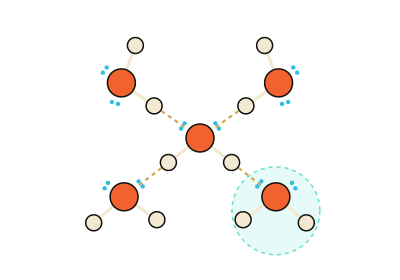
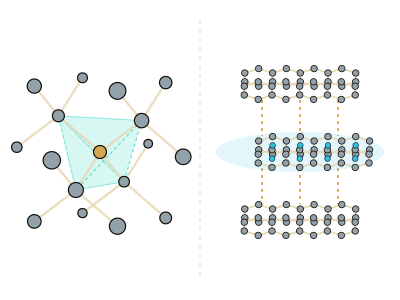
    Diamond and graphite, and hydrogen bonding in water, in the Label lab.
    9

    The League's test

    Pass the League's test

    Six exam-style questions from the League. Get all six right to earn your stamp. Three wrong and you resit.

    The League's badge

    League test · Bonding

    You: ♥♥♥

    Press Start when you're ready.

    Remember it

    Tap a card to flip it. Say the answer before you flip.

    Kay:That's bonding. Next time someone calls diamond and pencil lead "totally different", tell them it's the same carbon, just better organised.
    Chemical bonding: Chemistry explained, with games · L.O.E.P