15 wks to JAMB

L.O.E.P · BiologyNo. 09

Explainer · Transport in animals and plants · about 15 min

How does a 20-metre oil palm lift water to its leaves with no pump at all?

Watch the lecture

Ash and Kay teach this lesson, start to finish.

⬇ Save for offline

Keeps it on this phone, so it plays with no signal and no data, at this same address.

In short

The key words in this lesson, in plain English:

Arteries and veins:
The blood vessels of the heart's two directions. Arteries take blood out at high pressure (thick, elastic walls). Veins carry it back at low pressure (thinner walls and valves to stop backflow).
Xylem:
The plant tissue that carries water and mineral salts up from the roots. Its walls are strengthened with lignin.
Phloem:
The plant tissue that carries food (mainly sucrose) from the leaves to other parts of the plant.

Free this month: 1 of 1 lessons. A free account gives you 3 a month.

An Amoeba gets its oxygen straight through its skin. You can't: oxygen soaking in from your skin would take years to reach your big toe. So you carry a pump that beats about 100 000 times a day and some 100 000 km of tubes, the length of two trips round the Earth. A tall oil palm has the same problem the other way up: it lifts water 20 metres from the soil with no pump at all. That's transport.

Kay:A hundred thousand kilometres of blood vessels in me. And I still can't find my charger.
1

Play · grow it

Why big bodies need a transport system

Grow the cube and watch its surface area against its volume. Look at the smallest and the largest.

Slide the size

Surface area24 cm²Volume8 cm³Surface : volume3 : 1

Surface area to volume

Where you see it: in the kitchen, yam cut into small cubes cooks much faster than a whole tuber, because heat reaches the middle of a small piece across a short distance from a large surface. As an organism gets bigger, its volume (the cells needing food and oxygen) grows faster than its surface (where they can get in). A tiny organism like BiologyProtistA single-celled organism with a nucleus, in the kingdom Protista: Amoeba (moves by pseudopodia), Paramecium (cilia) and Euglena (a flagellum and chloroplasts).Science dictionary ▶ has a large BiologySurface area to volume ratioSurface area divided by volume. Small organisms have a large ratio, so diffusion is enough; large ones have a small ratio and need transport systems.Science dictionary ▶, so BiologyDiffusionThe spreading of particles from where they are more concentrated to where they are less concentrated, until evenly spread. It needs no energy.The smell of fried plantain fills the whole house by diffusion.Science dictionary ▶ through its surface is enough. A large animal or plant has a small ratio, and cells deep inside are too far from the surface: it needs a transport system to carry materials around. In BiologyMammalsWarm-blooded vertebrates with hair or fur and mammary glands that feed the young on milk; most also have external ear flaps and different kinds of teeth. Bats, whales and humans.Science dictionary ▶ that's the blood, heart and vessels; in plants, BiologyXylemThe plant tissue that carries water and mineral salts up from the roots. Its walls are strengthened with lignin.The tough threads left after chewing sugar cane are mostly xylem and other vascular tissue.Science dictionary ▶ and BiologyPhloemThe plant tissue that carries food (mainly sucrose) from the leaves to other parts of the plant.Cassava tubers fill with starch made from sugar carried down in the phloem.Science dictionary ▶.
2

Play · follow the blood

Through the heart

A red blood cell arrives back from your leg, short of oxygen. Tap where it goes next, all the way round to the body again.

Where does it enter the heart?

(the body's right is on your left)R atriumL atriumR ventricleL ventricle

    The heart and double circulation

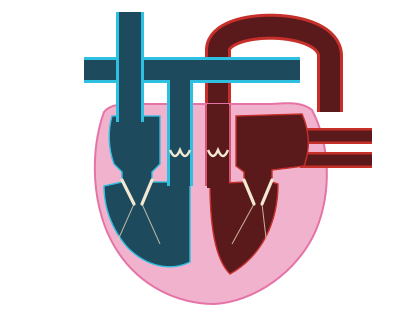
    Where you see it: at a clinic, a doctor presses a stethoscope to the chest to listen to the lub-dub; an unusual extra sound, a murmur, can mean a BiologyArteries and veinsThe blood vessels of the heart's two directions. Arteries take blood out at high pressure (thick, elastic walls). Veins carry it back at low pressure (thinner walls and valves to stop backflow).Science dictionary ▶ is letting blood leak backwards. The heart is two pumps side by side. The right side takes deoxygenated blood from the body (vena cava) and pumps it to the lungs (pulmonary artery). The left side takes oxygenated blood from the lungs (pulmonary vein) and pumps it to the whole body (aorta), so its muscular wall is much thicker. Blood passes through the heart twice for every trip round the body: a BiologyDouble circulationBlood passes through the heart twice on each trip round the body: right side to the lungs, left side to the rest of the body.Science dictionary ▶. Valves stop it flowing backwards; their closing makes the "lub-dub" of the heartbeat.
    3

    Play · tap along

    Take a pulse

    Tap along with the heartbeat for 8 beats to measure the pulse. Do it at rest, then after a run.

    Choose rest or after a run

    Your count–Taps0 / 8

    Heartbeat and pulse

    Where you see it: after a sprint on sports day you can feel the pulse throbbing in your neck; a few minutes of rest and it slows back down. Each beat, the ventricles contract and push a surge of blood into the BiologyArteries and veinsThe blood vessels of the heart's two directions. Arteries take blood out at high pressure (thick, elastic walls). Veins carry it back at low pressure (thinner walls and valves to stop backflow).Science dictionary ▶, which stretch and recoil: that's the pulse, felt at the wrist or neck. A resting adult's heart beats about 60 to 80 times a minute. During exercise the muscles need more oxygen and glucose and produce more carbon dioxide, so the heart beats faster and harder; fitter people have a lower resting rate.
    4

    Play · arcade

    Artery or vein?

    Press Start

    Swipe left for artery, right for vein

    Score0Streak0Lives♥♥♥

    Arteries, veins and capillaries

    Where you see it: for a blood test or a blood donation, the needle goes into a vein on the inside of the elbow, where veins lie close to the surface and the PhysicsPressureHow hard a force presses on each square metre of a surface: pressure = force ÷ area, measured in pascals (Pa).A sharp knife cuts because its thin edge puts the force on a tiny area. Tractors and camels have wide tyres or feet so they don't sink.Science dictionary ▶ is low. BiologyArteries and veinsThe blood vessels of the heart's two directions. Arteries take blood out at high pressure (thick, elastic walls). Veins carry it back at low pressure (thinner walls and valves to stop backflow).Science dictionary ▶ carry blood away from the heart under high pressure: thick, muscular, elastic walls and a narrow lumen. Veins carry it back at low pressure: thinner walls, a wide lumen, and valves to stop backflow; squeezing by nearby muscles helps push it along. BiologyCapillaryThe tiniest blood vessels, with walls one cell thick, where food, oxygen and wastes pass between the blood and the body's cells.Your skin feels hot after running because more blood flows through its capillaries.Science dictionary ▶ link them: walls one cell thick, where food, oxygen and wastes are exchanged with the tissues.
    5

    Play · under the microscope

    What's in blood?

    A drop of blood, stained and magnified. For each job, tap the part of the blood that does it. Get 5 right.

    Press Start

    Right0 / 5

    Blood

    Where you see it: hospital laboratories run a full blood count on a small sample, counting the BiologyRed blood cellA biconcave disc with no nucleus, packed with haemoglobin, that carries oxygen round the body.Science dictionary ▶, white cells and BiologyPlateletA tiny fragment of a cell in the blood that starts clotting at a wound.Science dictionary ▶ to look for signs of anaemia or infection. BiologyPlasmaThe yellowish liquid part of blood, which carries dissolved food, carbon dioxide, urea, hormones and heat.Science dictionary ▶, the yellowish liquid, carries dissolved food, carbon dioxide, BiologyUreaThe main nitrogen-containing waste in human urine, made in the liver from extra amino acids and removed by the kidneys.Urea is also made in factories and sold as a nitrogen fertiliser.Science dictionary ▶, BiologyHormoneA chemical messenger made by an endocrine gland and carried in the blood to a target organ, which it changes.Adrenaline makes your heart pound when you are frightened.Science dictionary ▶ and heat. Red blood cells are biconcave discs with no BiologyNucleusA centre. In an atom, the tiny dense core of protons and neutrons that holds nearly all its mass. In a cell, the part that holds the chromosomes and controls the cell.Science dictionary ▶, packed with BiologyHaemoglobinThe iron-containing red protein in red blood cells that carries oxygen from the lungs to the tissues.Lack of iron in the diet means less haemoglobin, so the person tires easily (anaemia).Science dictionary ▶, which carries oxygen as oxyhaemoglobin. BiologyWhite blood cellBlood cells that defend the body: phagocytes engulf germs, lymphocytes make antibodies.Science dictionary ▶ defend the body: phagocytes engulf germs; lymphocytes make BiologyAntibodyA Y-shaped protein made by white blood cells that locks onto a specific germ or toxin, marking it for destruction.Vaccines work by teaching the body to make antibodies in advance.Science dictionary ▶. Platelets are cell fragments that start blood clotting at a wound. BiologyLymphTissue fluid that has leaked from capillaries to bathe the cells, drained back towards the blood in lymph vessels.Science dictionary ▶ leaks out of BiologyCapillaryThe tiniest blood vessels, with walls one cell thick, where food, oxygen and wastes pass between the blood and the body's cells.Your skin feels hot after running because more blood flows through its capillaries.Science dictionary ▶ to bathe the cells and drains back as lymph.
    6

    Ash's lab

    Xylem and phloem

    Two experiments. Stand a balsam shoot in red ink and cut across its stem. Then cut a ring of bark from a branch and wait.

    Start an experiment

    Transport in plants

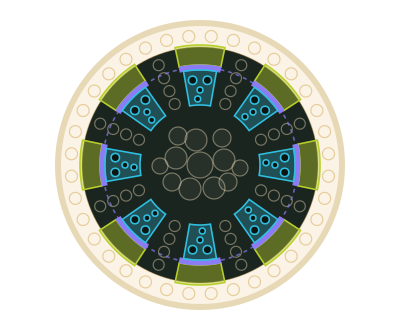
    Where you see it: goats that strip the bark all the way round a young tree can kill it, because the BiologyPhloemThe plant tissue that carries food (mainly sucrose) from the leaves to other parts of the plant.Cassava tubers fill with starch made from sugar carried down in the phloem.Science dictionary ▶ goes with the bark and the roots are starved of sugar. BiologyXylemThe plant tissue that carries water and mineral salts up from the roots. Its walls are strengthened with lignin.The tough threads left after chewing sugar cane are mostly xylem and other vascular tissue.Science dictionary ▶ vessels (dead, hollow tubes strengthened with lignin) carry water and BiologyMineral saltsElements such as iron, calcium and iodine, needed in small amounts by animals (and nitrates, phosphates and magnesium by plants).Science dictionary ▶ up from the roots. Phloem sieve tubes (living, just under the bark) carry sugars and amino ChemistryAcidA substance with a pH below 7 that releases hydrogen ions in water. Strong acids are corrosive; the stomach uses hydrochloric acid to digest food.Acids turn blue litmus paper red.Science dictionary ▶ from the leaves to where they're used or stored, in any direction: BiologyTranslocationThe movement of sugars and amino acids through the phloem, from the leaves to wherever they are used or stored.Science dictionary ▶. Xylem and phloem run together in BiologyVascular bundleA strand of xylem and phloem running through a plant's roots, stem and leaves: its transport system.Science dictionary ▶, which the red ink shows up. Removing a ring of bark removes the phloem: sugar piles up above the ring and the bark swells there, while the xylem inside keeps the leaves supplied with water.
    7

    Play · race it

    The potometer

    A leafy shoot drinks through a thin tube; an air bubble shows how fast. Change the conditions and find the fastest rate. Try at least 4 set-ups.

    Set the conditions, then time the bubble

      Bubble moved–Set-ups0 / 4

      Transpiration

      Where you see it: on a hot, dry harmattan afternoon, vegetables on a farm BiologyTurgorThe pressure of a plant cell's contents pushing out against its cell wall when it has taken in plenty of water. Turgid cells hold up soft stems and leaves.When the cells lose water they go flaccid and the plant wilts.Science dictionary ▶ by midday as the leaves lose water faster than the roots take it up, so farmers water in the early morning or evening. BiologyTranspirationThe loss of water vapour from a plant, mainly through the stomata of the leaves. It pulls water up the xylem.A plastic bag tied over a leafy branch in the sun mists up with water from transpiration.Science dictionary ▶ is the PhysicsEvaporationWhen a liquid turns into a gas at its surface, below its boiling point, like puddles drying up.Sweat cools you by evaporating.Science dictionary ▶ of water from the leaves, mostly through the BiologyStomataTiny pores, mostly on the underside of leaves, opened and closed by guard cells. Gases and water vapour pass through them.Many plants close their stomata in the midday heat to save water.Science dictionary ▶. It pulls a column of water up the BiologyXylemThe plant tissue that carries water and mineral salts up from the roots. Its walls are strengthened with lignin.The tough threads left after chewing sugar cane are mostly xylem and other vascular tissue.Science dictionary ▶ from the roots (the transpiration pull), helped by root PhysicsPressureHow hard a force presses on each square metre of a surface: pressure = force ÷ area, measured in pascals (Pa).A sharp knife cuts because its thin edge puts the force on a tiny area. Tractors and camels have wide tyres or feet so they don't sink.Science dictionary ▶ and PhysicsCapillarityThe rise or fall of a liquid in a narrow tube. Water rises in glass (adhesion beats cohesion); mercury falls (cohesion beats adhesion). The narrower the tube, the bigger the effect.It lifts kerosene up a lantern's wick and makes a towel soak up water.Science dictionary ▶, and it cools the leaf. It is faster when it is warm, windy, dry and bright (stomata open in light). A potometer actually measures water uptake, which is nearly all lost by transpiration.
      8

      Exam corner

      How the exam asks it

      The journey of water through a plant. Tap each step to reveal it.

      Describe how water travels from the soil to the air through a flowering plant.

      Now try the real ones

      Real JAMB, WAEC and NECO past questions on this lesson (the JAMB and WAEC ones in LOEP's words). Answer them one at a time: each is marked, with the worked answer.

      Start the 10 real questions ▶
      1. JAMB 2023Water and mineral salts move up a plant stem through the
      2. WAEC 2012A large multicellular animal cannot rely on diffusion alone to supply oxygen to all its cells because
      3. JAMB 2023Which part of the blood carries oxygen from the lungs to the body cells?
      4. WAEC 2018A leafy twig is stood in red ink for a few hours, then cut across. Red-stained tissue shows that water and dissolved substances move up the stem through the
      5. JAMB 2023Which statement about the human heart is true?
      6. WAEC 2019A person of blood group A donates blood. To which groups can the blood be safely given?
      7. JAMB 2014Why can Amoeba live without a transport system while a goat cannot?
      8. WAEC 2002Which kind of surface allows gases to diffuse across it fastest?
      9. JAMB 2019A leafy shoot stands in a bottle of water with a layer of oil on top so that no water evaporates from the bottle. The whole set-up weighs 25.6 g at the start an
      10. JAMB 2019Antibodies in the blood help defend the body mainly by making invading microbes

      Label it

      The heart and a cross-section of a stem, in the Label lab.
      9

      The League's test

      Pass the League's test

      Six exam-style questions from the League. Get all six right to earn your stamp. Three wrong and you resit.

      The League's badge

      League test · Transport

      You: ♥♥♥

      Press Start when you're ready.

      Remember it

      Tap a card to flip it. Say the answer before you flip.

      Kay:That's transport. Next time your heart races before an exam, it's just your left ventricle doing overtime. Breathe.
      Transport in animals and plants: Biology explained, with games