15 wks to JAMB

L.O.E.P · BiologyNo. 14

Explainer · Respiration · about 15 min

Why do your legs burn after a 400 m race, and why do you keep panting long after you've stopped?

Watch the lecture

Ash and Kay teach this lesson, start to finish.

⬇ Save for offline

Keeps it on this phone, so it plays with no signal and no data, at this same address.

In short

The key words in this lesson, in plain English:

Respiration:
The breakdown of food (glucose) in every living cell to release energy. Aerobic respiration uses oxygen; anaerobic respiration does not.
ATP:
Adenosine triphosphate: the molecule that stores the energy released in respiration and hands it to whatever the cell is doing.

Free this month: 1 of 1 lessons. A free account gives you 3 a month.

Breathing isn't respiration. Breathing moves air in and out of your lungs; respiration happens inside every one of your cells, all the time, releasing the energy locked in food. Your heart beating, your brain thinking through this sentence, the bread rising in the bakery, the palm wine fizzing: all of it is respiration.

Kay:After the 400 m at inter-house sports my legs were burning and I couldn't stop panting, even standing still. What was going on?
1

Play · quick rounds

What is respiration for? Energy and ATP

Press Next

Five right to pass.

Right0 / 5

Respiration and ATP

Where you see it: yams stored in a barn slowly lose PhysicsWeightThe pull of gravity on a mass, measured in newtons: W = mg, about 10 N for every kilogram on Earth.A 50 kg student weighs about 500 N.Science dictionary ▶ over the months, because the living tubers keep respiring day and night, using up their own stored food to release energy. BiologyRespirationThe breakdown of food (glucose) in every living cell to release energy. Aerobic respiration uses oxygen; anaerobic respiration does not.Breathing is not respiration: breathing brings in the oxygen that respiration in your cells uses.Science dictionary ▶ is the breakdown of food, mainly glucose, inside living cells to release energy. The energy is stored in BiologyATPAdenosine triphosphate: the molecule that stores the energy released in respiration and hands it to whatever the cell is doing.Every step you take is powered by ATP in your leg muscles.Science dictionary ▶ (adenosine triphosphate), the cell's energy currency, and spent on muscle contraction, building BiologyProteinLarge molecules made of chains of amino acids, used to build and repair the body. Beans, fish, eggs and meat are rich in them.Science dictionary ▶, active transport, BiologyNerve impulseAn electrical message travelling along a neurone.Science dictionary ▶, cell division and keeping warm. Every living cell respires, in plants as well as animals, day and night. Respiration is the opposite of BiologyPhotosynthesisHow green plants make food: chlorophyll traps light energy to turn carbon(IV) oxide and water into glucose, giving off oxygen.Every grain of rice and garri you eat began as sugar made by photosynthesis in a leaf.Science dictionary ▶: it uses glucose and oxygen and gives out carbon(IV) oxide and water.
2

Work it out

Aerobic or anaerobic? Follow a glucose molecule

Track one molecule of glucose through a muscle cell, step by step.

Step 1

    Aerobic and anaerobic respiration

    Where you see it: fish farmers change the water or run aerators in crowded ponds, because the fish need dissolved oxygen for BiologyRespirationThe breakdown of food (glucose) in every living cell to release energy. Aerobic respiration uses oxygen; anaerobic respiration does not.Breathing is not respiration: breathing brings in the oxygen that respiration in your cells uses.Science dictionary ▶ to release enough energy from their food. BiologyGlycolysisThe first stage of respiration, in the cytoplasm: one glucose is split into two molecules of pyruvic acid, with a little ATP. It needs no oxygen.Both aerobic and anaerobic respiration begin with glycolysis.Science dictionary ▶, in the cytoplasm, splits each glucose into two molecules of pyruvic ChemistryAcidA substance with a pH below 7 that releases hydrogen ions in water. Strong acids are corrosive; the stomach uses hydrochloric acid to digest food.Acids turn blue litmus paper red.Science dictionary ▶, with a little BiologyATPAdenosine triphosphate: the molecule that stores the energy released in respiration and hands it to whatever the cell is doing.Every step you take is powered by ATP in your leg muscles.Science dictionary ▶, and needs no oxygen. With oxygen (aerobic), pyruvic acid goes into the BiologyMitochondrionThe organelle where most of the energy from aerobic respiration is released as ATP: the cell's powerhouse.Muscle and liver cells, which need lots of energy, have many mitochondria.Science dictionary ▶ and is broken down completely in the BiologyKrebs cycleThe stage of aerobic respiration, in the mitochondria, that breaks pyruvic acid down completely to carbon(IV) oxide and water, releasing most of the energy.It only runs when oxygen is available.Science dictionary ▶ to carbon(IV) oxide and water: C₆H₁₂O₆ + 6O₂ → 6CO₂ + 6H₂O + energy (38 ATP is the textbook figure). Without oxygen (anaerobic), it stops part-way: muscles make BiologyOxygen debtThe extra oxygen needed after hard exercise to break down the lactic acid made by anaerobic respiration in the muscles.It's why you keep panting after a sprint even when you've stopped.Science dictionary ▶; yeast and plants make ChemistryEthanolThe alcohol in alcoholic drinks (C₂H₅OH). It is also used as a fuel and a solvent.The liver breaks it down in steps.Science dictionary ▶ and carbon(IV) oxide. Anaerobic respiration releases far less energy, about 2 ATP per glucose, because most of the energy is still locked in the lactic acid or ethanol.
    3

    Play · the 400 m

    Run hard, then pay it back

    Sprint, and watch what happens in your leg muscles. Then rest until you've paid back what you owe.

    Press Sprint

    O₂lactic
    Oxygen supplyenoughLactic acid0%Breaths a minute16

    Oxygen debt

    Where you see it: after carrying full buckets of water up several flights of stairs, you stand breathing hard for a minute or two while the extra oxygen deals with the BiologyOxygen debtThe extra oxygen needed after hard exercise to break down the lactic acid made by anaerobic respiration in the muscles.It's why you keep panting after a sprint even when you've stopped.Science dictionary ▶ in your muscles. In a sprint your muscles need energy faster than your heart and lungs can bring oxygen. So they top up with BiologyRespirationThe breakdown of food (glucose) in every living cell to release energy. Aerobic respiration uses oxygen; anaerobic respiration does not.Breathing is not respiration: breathing brings in the oxygen that respiration in your cells uses.Science dictionary ▶: glucose → lactic acid + a little energy. Lactic acid builds up, and with it the muscles burn and tire. After the race you keep panting: that extra oxygen is the oxygen debt, used to break the lactic acid down to carbon(IV) oxide and water (much of it in the liver). Kay's burning legs were lactic acid; the panting was paying the debt.
    4

    Ash's lab

    Yeast, bread dough and palm wine

    Sugar solution and yeast in a bottle, a balloon over the neck. Set the water bath, then wait and see how far the balloon fills.

    Set the temperature

    lime water
    Bath10 °CGas made–

    Fermentation

    Where you see it: people making puff-puff leave the yeast batter in a warm spot in the kitchen, not a cold one, so the yeast BiologyRespirationThe breakdown of food (glucose) in every living cell to release energy. Aerobic respiration uses oxygen; anaerobic respiration does not.Breathing is not respiration: breathing brings in the oxygen that respiration in your cells uses.Science dictionary ▶ faster and the batter rises sooner. Yeast is a BiologyFungusAn organism with no chlorophyll that feeds by absorbing food from dead or living matter. Bodies of thread-like hyphae; includes moulds, mushrooms and yeast.Science dictionary ▶ that can respire without oxygen: glucose → ChemistryEthanolThe alcohol in alcoholic drinks (C₂H₅OH). It is also used as a fuel and a solvent.The liver breaks it down in steps.Science dictionary ▶ + carbon(IV) oxide + a little energy. This is BiologyFermentationAnaerobic respiration by micro-organisms such as yeast or bacteria, making products like alcohol, carbon(IV) oxide or lactic acid.Palm wine, ogi, garri, bread and yoghurt all depend on fermentation.Science dictionary ▶. Its BiologyEnzymeA protein that speeds up a chemical reaction in living things without being used up, like the enzymes that break down food.Most enzymes stop working if they get too hot.Science dictionary ▶ work fastest at a warm temperature, around 35 °C; it's slow in the cold, and above about 50 °C the enzymes are ChemistryDenaturationA permanent change in a protein's shape caused by heat, strong acid or alkali, or heavy-metal salts. Boiled egg white is denatured albumin; a denatured enzyme stops working.Science dictionary ▶ and the yeast dies. The gas turns ChemistryLime waterA clear solution of calcium hydroxide, Ca(OH)₂, used to test for carbon(IV) oxide: the gas turns it milky as white calcium carbonate forms. Excess gas makes it clear again.The milkiness clears because calcium hydrogencarbonate, Ca(HCO₃)₂, dissolves.Science dictionary ▶ milky. Bakers use the CO₂ to make bread dough rise (the ethanol bakes off); brewers keep the ethanol in palm wine, burukutu and beer. Plant roots in waterlogged soil respire anaerobically too, which is why most crops die if their roots stand in water for long.
    5

    Work it out

    How you breathe in

    Air doesn't get sucked in. Work out how a breath really starts, one step at a time.

    Step 1

      The mechanism of breathing

      Where you see it: when a nurse at the clinic counts a patient's breaths, the chest rising and the belly pushing out slightly show the ribs lifting and the BiologyDiaphragm and intercostal musclesThe breathing muscles. To breathe in, the intercostal muscles pull the ribs up and out and the dome-shaped diaphragm contracts and flattens, so the chest gets bigger and air flows in.Breathing out reverses it: they relax and the chest gets smaller.Science dictionary ▶ flattening with each breath in. Breathing in (inspiration): the external intercostal muscles contract and pull the ribs up and out; the dome-shaped diaphragm contracts and flattens. The chest cavity gets bigger, so the PhysicsPressureHow hard a force presses on each square metre of a surface: pressure = force ÷ area, measured in pascals (Pa).A sharp knife cuts because its thin edge puts the force on a tiny area. Tractors and camels have wide tyres or feet so they don't sink.Science dictionary ▶ inside the lungs falls below the air pressure outside, and air rushes in. Breathing out (expiration) is the reverse: the intercostal muscles relax, the ribs fall, the diaphragm relaxes and domes up, the volume shrinks, pressure rises and air is pushed out. Air travels nose → trachea → bronchi → bronchioles → BiologyAlveoliThe tiny air sacs in the lungs, with walls one cell thick, where oxygen enters the blood and carbon(IV) oxide leaves it.Smoke from cigarettes and open cooking fires damages the walls of the alveoli.Science dictionary ▶, where oxygen BiologyDiffusionThe spreading of particles from where they are more concentrated to where they are less concentrated, until evenly spread. It needs no energy.The smell of fried plantain fills the whole house by diffusion.Science dictionary ▶ into the blood and carbon(IV) oxide diffuses out.
      6

      Play · quick rounds

      Who breathes with what?

      Press Next

      Five right to pass.

      Right0 / 5

      Respiratory surfaces

      Where you see it: buyers at the fish market lift the gill cover to check freshness: the many thin, bright red gill filaments show a large surface with a rich blood supply. Every respiratory surface is large for its volume, thin, moist (gases dissolve before they diffuse), and in larger animals has a rich blood supply to keep the gradient steep. Tiny organisms like BiologyProtistA single-celled organism with a nucleus, in the kingdom Protista: Amoeba (moves by pseudopodia), Paramecium (cilia) and Euglena (a flagellum and chloroplasts).Science dictionary ▶ exchange gases through the whole cell membrane. The earthworm and the toad breathe through moist skin (the toad also through lungs and the lining of its mouth). BiologyInsectsArthropods with three body parts (head, thorax, abdomen), three pairs of legs on the thorax, one pair of antennae and usually wings: housefly, mosquito, cockroach, grasshopper.Science dictionary ▶ such as the cockroach and grasshopper take air through BiologySpiracles and tracheae (insects)An insect's breathing system: air enters through spiracles, holes along the body, into branching air tubes (tracheae and tracheoles) that carry it straight to the cells.The cockroach and the grasshopper breathe this way. (In humans the trachea is the windpipe.)Science dictionary ▶ into a branching system of tracheae that reach every cell. Fish use gills; BiologyMammalsWarm-blooded vertebrates with hair or fur and mammary glands that feed the young on milk; most also have external ear flaps and different kinds of teeth. Bats, whales and humans.Science dictionary ▶, birds and BiologyReptilesCold-blooded vertebrates with dry, scaly skin and lungs, laying leathery-shelled eggs on land: lizards, snakes, crocodiles, tortoises.Science dictionary ▶ use lungs. Plants exchange gases through BiologyStomataTiny pores, mostly on the underside of leaves, opened and closed by guard cells. Gases and water vapour pass through them.Many plants close their stomata in the midday heat to save water.Science dictionary ▶ in leaves and BiologyLenticelA small pore of loosely packed cells in the bark of a woody stem, through which gases are exchanged.Leaves use stomata; woody stems and roots use lenticels.Science dictionary ▶ in woody stems.
      7

      Play · arcade

      Breathed in or breathed out?

      Press Start

      Swipe left for air breathed in, right for air breathed out

      Score0Streak0Lives♥♥♥

      Inhaled and exhaled air

      Where you see it: on a cold harmattan morning in Jos, your breath forms a faint mist, because exhaled air is warm and ChemistrySaturated and unsaturatedA saturated compound has only single carbon–carbon bonds and holds all the hydrogen it can; an unsaturated one has double or triple bonds and decolourises bromine water.Science dictionary ▶ with water vapour that PhysicsCondensationWhen a gas cools and turns back into a liquid, like water droplets on a cold bottle.It's the reverse of evaporation.Science dictionary ▶ in the cold air. Air breathed in has about 21% oxygen and 0.04% carbon(IV) oxide, at air temperature, with variable water vapour. Air breathed out has about 16% oxygen and 4% carbon(IV) oxide, is saturated with water vapour and is warm, near 37 °C. Nitrogen hardly changes, about 78% in both. Breathe out through ChemistryLime waterA clear solution of calcium hydroxide, Ca(OH)₂, used to test for carbon(IV) oxide: the gas turns it milky as white calcium carbonate forms. Excess gas makes it clear again.The milkiness clears because calcium hydrogencarbonate, Ca(HCO₃)₂, dissolves.Science dictionary ▶ and it turns milky far faster than when air is drawn through it; breathe on a cold mirror and it mists over.
      8

      Exam corner

      How the exam asks it

      Aerobic against anaerobic, every part of it. Tap each step to reveal it.

      (a) Write word equations for aerobic respiration and for anaerobic respiration in muscle. (b) One glucose gives 38 ATP aerobically and 2 ATP anaerobically. How many times more energy does aerobic respiration release? (c) Why is less released anaerobically?

      Now try the real ones

      Real JAMB, WAEC and NECO past questions on this lesson (the JAMB and WAEC ones in LOEP's words). Answer them one at a time: each is marked, with the worked answer.

      Start the 10 real questions ▶
      1. JAMB 2019Which of the following does NOT happen when a person breathes out normally?
      2. WAEC 2020During photosynthesis, oxygen leaves the leaf through the stomata by moving from a region of high concentration to one of low concentration. This process is cal
      3. JAMB 2014Which structure in an animal does a job most like that of the stomata of a leaf, letting air in and out?
      4. WAEC 2020A student blows air through a straw into clear limewater, and it turns milky. Which gas in the breath caused this?
      5. JAMB 2005Yeast in glucose solution is sealed in a tube containing alkaline pyrogallol, which absorbs oxygen. Bubbles of carbon dioxide still appear. This shows that the
      6. WAEC 2020Yeast cells and mould cells are placed in sealed jars with very little oxygen. After a few days, the mould is dead but the yeast is alive. What is the best expl
      7. JAMB 2017How does a free-living single-celled organism such as Amoeba take in oxygen?
      8. WAEC 2020Air enters the body of a cockroach through spiracles into a network of tubes called
      9. JAMB 2018What is the net result of glycolysis for each molecule of glucose?
      10. JAMB 2007Guard cells open a stoma when they absorb water and become turgid. The process that moves water into them is

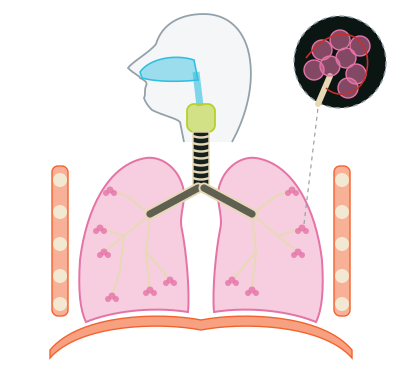
      Label it

      The human respiratory system, from the trachea to the alveoli, in the Label lab.
      9

      The League's test

      Pass the League's test

      Six exam-style questions from the League. Get all six right to earn your stamp. Three wrong and you resit.

      The League's badge

      League test · Respiration

      You: ♥♥♥

      Press Start when you're ready.

      Remember it

      Tap a card to flip it. Say the answer before you flip.

      Ash:That's it, Kay: your legs went anaerobic and filled with lactic acid, and all that panting afterwards was you paying back the oxygen debt.
      Respiration: Biology explained, with games · L.O.E.P

