15 wks to JAMB

L.O.E.P · BiologyNo. 12

Explainer · Humans and the environment · about 15 min

The mosquito that gave you malaria may have hatched in an old tyre behind your house. What else do we do to our surroundings?


Watch the lecture

Ash and Kay teach this lesson, start to finish.

⬇ Save for offline

Keeps it on this phone, so it plays with no signal and no data, at this same address.

In short

The key words in this lesson, in plain English:

Malaria:
A disease caused by the Plasmodium parasite and spread by the bite of infected female Anopheles mosquitoes. It causes fever, chills and can be deadly without treatment.
Pollution:
The release into the environment of substances or energy (such as noise or heat) that harm living things: sewage, oil spills, smoke, fumes, refuse.
Conservation:
The careful use and protection of natural resources so they last. Renewable resources (forests, fish, soil) replace themselves if well managed; non-renewable ones (crude oil, coal, minerals) don't.

Free this month: 1 of 1 lessons. A free account gives you 3 a month.

The mosquito that gives you malaria may have hatched in the rainwater sitting in an old tyre behind your house. The fish in a creek in the Delta die because of oil and fertiliser upstream. The desert creeps south every year where the trees are cut and the grass is grazed bare. People change their surroundings, and the surroundings change people's health. This lesson is about both: disease, pollution and conservation.

Kay:After my malaria in JSS3, my mum turned every bucket in our compound upside down. Ash says she was doing public health.
1

Play · quick rounds

How does it spread?

Press Next

How does it spread?

Right0 / 5

Vectors and how diseases spread

Where you see it: food sellers cover trays of fried fish or akara with netting or a glass case, because flies that land on food can carry germs from faeces on their legs. A PhysicsVectorIn physics, a quantity with both size and direction, such as velocity or force. In biology, an animal that carries a disease to people, like a mosquito.Speed is not a vector; velocity is.Science dictionary ▶ is an organism that carries a BiologyPathogenAn organism that causes disease: a virus, bacterium, fungus, protozoan or worm. Plasmodium (malaria) and Vibrio (cholera) are pathogens.Science dictionary ▶ (a pathogen) from one host to another. The female BiologyAnophelesThe group of mosquitoes whose females can carry and spread malaria. They usually bite between dusk and dawn.Only female mosquitoes drink blood: they need it to make eggs.Science dictionary ▶ mosquito carries the BiologyMalariaA disease caused by the Plasmodium parasite and spread by the bite of infected female Anopheles mosquitoes. It causes fever, chills and can be deadly without treatment.Sleeping under treated nets and clearing stagnant water help prevent it.Science dictionary ▶ BiologyParasiteA living thing that lives on or inside another (its host) and feeds off it, harming it.Tapeworms, lice and the malaria parasite are all parasites.Science dictionary ▶, BiologyPlasmodiumThe single-celled parasite that causes malaria. It lives in the mosquito's salivary glands, then in the human liver and red blood cells.Its life cycle needs both a mosquito and a human host.Science dictionary ▶; the Aedes mosquito carries yellow BiologyFeverA body temperature above normal (about 37 °C), usually the body's response to an infection.A high fever in a malaria area should always be tested.Science dictionary ▶; the BiologyTsetse flyA biting fly of the savanna that carries Trypanosoma, the parasite of sleeping sickness in people and nagana in cattle.Science dictionary ▶ carries sleeping sickness; the blackfly carries river blindness. Water snails carry the BiologyBilharzia (schistosomiasis)A disease caused by Schistosoma worms. Their larvae leave water snails and bore into the skin of people wading in fresh water; the adults live in blood vessels of the bladder or gut.Science dictionary ▶ (Schistosoma) worm. Houseflies carry BiologyCholeraA disease of severe diarrhoea caused by Vibrio bacteria in water or food dirtied with faeces. Prevented by clean water, good toilets and handwashing; treated with oral rehydration.Science dictionary ▶ and BiologyTyphoidA bacterial fever spread in food and water dirtied with faeces, often by houseflies. Prevented by clean water, covering food, good sanitation and vaccination.Science dictionary ▶ germs from faeces to food on their legs and mouthparts. Some diseases need no vector: cholera spreads in water dirtied with faeces, BiologyTuberculosis (TB)A bacterial disease, mostly of the lungs, spread in droplets from coughs and sneezes. Prevented by the BCG vaccine and good ventilation; cured with a long course of antibiotics.Science dictionary ▶ in droplets from coughs, and measles and polio are stopped by BiologyVaccineA harmless form of a germ, or part of one, given so that the body makes antibodies in advance and is protected from the disease.Babies are vaccinated against measles and polio at clinics across Nigeria.Science dictionary ▶.
2

Play · the compound

Break the mosquito's cycle

Mosquitoes are breeding all over this compound. Tap a place, then the right action, until no mosquitoes are left.

Tap a place in the compound

!!!!!
Mosquitoes100%Places dealt with0 / 5

Controlling malaria

Where you see it: clinics and health campaigns give families ChemistryInsecticideA chemical made to kill insects, such as the sprays and treated nets used against mosquitoes.Overuse can make insects resistant to it.Science dictionary ▶-treated nets, because a net both stops bites at night and kills mosquitoes that land on it. Attack every stage. The eggs and larvae live in still water, so remove it: empty containers, cover water drums, clear blocked drains, and pour a film of oil (which stops larvae breathing) or put larva-eating fish in ponds that can't be drained. Kill adults with insecticide spray. Protect people with insecticide-treated nets, window screens and repellents, and treat the sick quickly with antimalarial drugs so mosquitoes can't pick up the BiologyParasiteA living thing that lives on or inside another (its host) and feeds off it, harming it.Tapeworms, lice and the malaria parasite are all parasites.Science dictionary ▶ from them.
3

Play · arcade

Useful microbe or harmful microbe?

Press Start

Swipe left for a useful microbe, right for a harmful one

Score0Streak0Lives♥♥♥

Micro-organisms and us

Microbes make bread rise and yoghurt and ogi sour, give us BiologyAntibioticA drug, first found in fungi and bacteria, that kills bacteria or stops them growing. It does not cure viral diseases.Taking antibiotics for a cold does no good and helps bacteria become resistant.Science dictionary ▶ (penicillin from a BiologyFungusAn organism with no chlorophyll that feeds by absorbing food from dead or living matter. Bodies of thread-like hyphae; includes moulds, mushrooms and yeast.Science dictionary ▶, streptomycin from BiologyBacteriumA tiny single-celled organism with no true nucleus. Some cause disease (cholera, typhoid); many are useful, making yoghurt, fixing nitrogen and rotting dead matter.Science dictionary ▶), fix nitrogen in the roots of beans and groundnuts, and rot dead matter and BiologySewageWaste water carrying faeces and urine. Untreated, it spreads cholera, typhoid and dysentery and feeds algal blooms; treatment works use bacteria to break it down.Science dictionary ▶. Others cause disease (BiologyCholeraA disease of severe diarrhoea caused by Vibrio bacteria in water or food dirtied with faeces. Prevented by clean water, good toilets and handwashing; treated with oral rehydration.Science dictionary ▶, BiologyTuberculosis (TB)A bacterial disease, mostly of the lungs, spread in droplets from coughs and sneezes. Prevented by the BCG vaccine and good ventilation; cured with a long course of antibiotics.Science dictionary ▶, ringworm), make BiologyToxinA poison made by a living thing, such as the toxins bacteria release in spoiled food or that cause the symptoms of tetanus and cholera.Science dictionary ▶, and spoil food. Keep them off food by cooking, covering, refrigeration, drying, salting, smoking and sugaring; kill them on surfaces with BiologyAntiseptics and disinfectantsChemicals that kill or stop microbes: antiseptics are mild enough for skin and wounds; disinfectants are stronger, for floors, toilets and drains.Science dictionary ▶ and on skin with antiseptics. Antibiotics work on bacteria, never on BiologyVirusGenetic material in a protein coat, far smaller than a bacterium. It shows no signs of life outside a living cell but multiplies inside one. Causes measles, polio and HIV.Science dictionary ▶.
4

Play · the river

What's killing the fish?

A river below a town and its farms. Turn on what's flowing into it and follow the river for two weeks. Then stop it and see the river recover.

Choose what flows in, then follow the river

AlgaefewOxygenhighFishhealthy

Water pollution

Where you see it: fish farmers watch for a pond turning thick and green after heavy feeding or fertiliser, because the fish may be found gasping at the surface at dawn when the oxygen runs low. BiologyPollutionThe release into the environment of substances or energy (such as noise or heat) that harm living things: sewage, oil spills, smoke, fumes, refuse.Science dictionary ▶ is the release into the environment of substances or energy that harm living things. BiologySewageWaste water carrying faeces and urine. Untreated, it spreads cholera, typhoid and dysentery and feeds algal blooms; treatment works use bacteria to break it down.Science dictionary ▶ carries the germs of BiologyCholeraA disease of severe diarrhoea caused by Vibrio bacteria in water or food dirtied with faeces. Prevented by clean water, good toilets and handwashing; treated with oral rehydration.Science dictionary ▶, BiologyTyphoidA bacterial fever spread in food and water dirtied with faeces, often by houseflies. Prevented by clean water, covering food, good sanitation and vaccination.Science dictionary ▶ and dysentery. Fertiliser and sewage feed a bloom of BiologyAlgaeSimple plant-like living things that make their own food by photosynthesis. They range from single cells to long seaweeds, and turn still water green.Algae make a large share of the oxygen we breathe.Science dictionary ▶; when the algae die, BiologyBacteriumA tiny single-celled organism with no true nucleus. Some cause disease (cholera, typhoid); many are useful, making yoghurt, fixing nitrogen and rotting dead matter.Science dictionary ▶ decaying them use up the oxygen, and the fish suffocate: BiologyEutrophicationOver-feeding of water by fertiliser or sewage: algae bloom, then die, and the bacteria decaying them use up the oxygen, so fish suffocate.Science dictionary ▶. Oil spills, as in the Niger Delta, coat the surface, stop oxygen dissolving, and kill fish, birds and BiologyMangrove swampA coastal swamp of salty, airless, waterlogged mud. Mangroves are halophytes with stilt roots for support, pneumatophores (breathing roots) for air, salt glands, and seeds that germinate on the tree.They line the Niger Delta.Science dictionary ▶. Industrial waste can carry poisons such as mercury and lead that build up along BiologyFood chainA feeding sequence showing how energy passes from a producer (green plant) to consumers. Linked food chains form a food web.Grass -> ram -> people at a Sallah feast is a short food chain.Science dictionary ▶. Control: treat sewage, use fertiliser carefully, and enforce the laws on dumping.
5

Play · quick rounds

What's in the air?

Press Next

Which pollutant?

Right0 / 4

Air and noise pollution

Where you see it: in parts of the Niger Delta, ChemistryGas flaringBurning off the natural gas (mostly methane) that comes up with crude oil, where there are no pipes to use it. It releases carbon(IV) oxide, soot, sulphur(IV) oxide and nitrogen oxides, and wastes a fuel.The flares of the Niger Delta have burnt for decades; capturing the gas for cooking gas and power is the cure.Science dictionary ▶ burn day and night beside oil fields, sending carbon(IV) oxide and soot into the air that nearby BiologyCommunityAll the populations of different species living together in one place at the same time.A population is one species; a community is all of them; add the non-living surroundings and it's an ecosystem.Science dictionary ▶ breathe. ChemistryCarbon(II) oxide (carbon monoxide)CO, a colourless, odourless, poisonous gas from fuel burnt in too little oxygen. It binds to haemoglobin far more strongly than oxygen, so the blood can't carry oxygen.Never run a generator indoors or near a window: it's a common cause of death in blackouts.Science dictionary ▶ (carbon monoxide), from engines and PhysicsGenerator (dynamo)A machine that turns mechanical energy into electrical energy by turning a coil in a magnetic field (or a magnet near a coil). Slip rings give a.c.; a split-ring commutator gives d.c.The petrol generator outside a shop in a blackout, and the huge turbines at Kainji, work the same way.Science dictionary ▶, has no smell; it binds to BiologyHaemoglobinThe iron-containing red protein in red blood cells that carries oxygen from the lungs to the tissues.Lack of iron in the diet means less haemoglobin, so the person tires easily (anaemia).Science dictionary ▶ so the blood can't carry oxygen, which is why a generator in a closed room kills. Sulphur(IV) oxide and nitrogen oxides from burning fuels cause BiologyAcid rainRain made acidic by sulphur(IV) oxide and nitrogen oxides from burning fuels. It damages buildings, leaves, soils and the life in lakes.Science dictionary ▶. Carbon(IV) oxide from burning and gas flaring traps heat: BiologyGreenhouse effect and global warmingGases such as carbon(IV) oxide and methane trap the earth's heat; more of them, from burning fuels, gas flaring and deforestation, warms the planet and changes the climate.Science dictionary ▶. Smoke and soot damage the lungs; old ChemistryCFCs (chlorofluorocarbons)Unreactive compounds of carbon, chlorine and fluorine once used in fridges, air conditioners and aerosol sprays. High in the sky, ultraviolet light frees chlorine atoms from them, which destroy ozone as a catalyst.The Montreal Protocol banned them, and the ozone layer is slowly recovering.Science dictionary ▶ from fridges and aerosols thin the ChemistryOzoneO₃, an allotrope of oxygen. High in the atmosphere it absorbs the sun's harmful ultraviolet light; CFCs from old fridges and aerosols damage this ozone layer.Science dictionary ▶. Noise from generators, loudspeakers and traffic damages hearing and causes stress.
6

Play · the Sahel

Push back the desert

The Sahara is creeping south into northern Nigeria. Choose what people do on this land, one year at a time, and push the desert back past where it started.

Choose this year's practices

where it started
Year1Desert edgestart

Deforestation and desert encroachment

Where you see it: in parts of the south-east, such as Anambra State, deep gullies open up where cleared, bare land is washed away by heavy rain, swallowing farmland and even roads. Cutting trees for timber, farmland and firewood (BiologyDeforestation and afforestationDeforestation is clearing forests for timber, farms or firewood. Afforestation is planting trees where there was no forest; reafforestation replants cleared land.Science dictionary ▶), bush burning and overgrazing strip the land of plants, so the topsoil dries, blows away and washes away (BiologyDesertificationThe spread of desert into dry farmland when overgrazing, bush burning and tree-felling leave bare soil that dries and blows or washes away (soil erosion). Fought with shelter belts and controlled grazing.Science dictionary ▶), and the desert spreads: desertification. Forests also give rainfall, timber, food, medicines and homes for wildlife. Fight back with afforestation (planting where there was no forest) and reafforestation, shelter belts of trees across the north (part of the Great Green Wall), controlled grazing, and cooking stoves that use less firewood.
7

Play · quick rounds

Will it run out?

Press Next

Renewable or not?

Right0 / 5

Conservation

Where you see it: fishing nets with a wider mesh let young fish slip through to grow and breed, so the same waters can keep giving a catch year after year. BiologyConservationThe careful use and protection of natural resources so they last. Renewable resources (forests, fish, soil) replace themselves if well managed; non-renewable ones (crude oil, coal, minerals) don't.Science dictionary ▶ is the careful use and protection of natural resources so that they last for the future. Renewable resources (forests, fish, wildlife, soil, fresh water) can replace themselves if they're used no faster than they grow back. Non-renewable ones (crude oil, coal, tin and other minerals) can't: once used, they're gone. Sunlight and wind never run out. Nigeria protects wildlife in BiologyNational parks and game reservesProtected areas where wildlife and its habitat are kept safe from hunting and clearing: Kainji Lake National Park, Yankari Game Reserve, Cross River National Park.Science dictionary ▶ and reserves such as Kainji Lake, Yankari Game Reserve and Cross River National Park, through laws against poaching, and with bodies like the Nigerian Conservation Foundation and the Federal Ministry of Environment.
8

Exam corner

How the exam asks it

A malaria question, every part of it. Tap each step to reveal it.

(a) Name the organism that causes malaria and its vector. (b) Explain how malaria passes from one person to another. (c) Give one way of controlling malaria at each stage: the larva, the adult mosquito, and the person.

Now try the real ones

Real JAMB, WAEC and NECO past questions on this lesson (the JAMB and WAEC ones in LOEP's words). Answer them one at a time: each is marked, with the worked answer.

Start the 10 real questions ▶
  1. JAMB 2023Which of these is a vector of a disease?
  2. WAEC 1991Which of these actions would reduce the number of wild animals in a game reserve?
  3. JAMB 2023Which of these is a major cause of pollution in rivers and lagoons?
  4. WAEC 2019Which of the following diseases is spread mainly through contaminated drinking water?
  5. JAMB 2023Which action helps to conserve resources in an ecosystem?
  6. WAEC 2020A law forbids the hunting of elephants for their tusks. This is an attempt to conserve
  7. JAMB 2020A child is given a vaccine against measles. The vaccine works by causing the body to
  8. WAEC 2020Which of these insects is both useful and harmful to humans?
  9. JAMB 2022Which list contains only sources of air pollution?
  10. JAMB 2019The larval stages of the Schistosoma parasite develop and multiply inside which animal before they infect people?

Label it

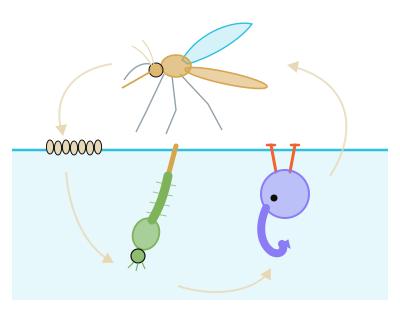
The life cycle of a mosquito, from egg to larva to pupa to adult, in the Label lab.
9

The League's test

Pass the League's test

Six exam-style questions from the League. Get all six right to earn your stamp. Three wrong and you resit.

The League's badge

League test · Humans and the environment

You: ♥♥♥

Press Start when you're ready.

Remember it

Tap a card to flip it. Say the answer before you flip.

Kay:That's humans and the environment. I've started turning buckets over in our compound too. Ash says I'm a public health officer now. I asked about the salary.
Humans and the environment: Biology explained, with games · L.O.E.P
