15 wks to JAMB

L.O.E.P · BiologyNo. 11

Explainer · Hormones and plant responses · about 15 min

Bag green plantains with one ripe one and they're all yellow by morning. What did the ripe one do?


Watch the lecture

Ash and Kay teach this lesson, start to finish.

⬇ Save for offline

Keeps it on this phone, so it plays with no signal and no data, at this same address.

In short

The key words in this lesson, in plain English:

Hormone:
A chemical messenger made by an endocrine gland and carried in the blood to a target organ, which it changes.
Insulin and glucagon:
Hormones from the islets of Langerhans in the pancreas. Insulin lowers blood glucose (stored as glycogen); glucagon raises it (glycogen back to glucose).

Free this month: 1 of 1 lessons. A free account gives you 3 a month.

Put a bunch of hard green plantains in a bag with one ripe one, and by morning they're all turning yellow. The ripe plantain is giving off a hormone, a gas called ethene, and the others respond to it. You run on hormones too: the pounding heart when you meet a snake on the farm path, the sugar level that stays steady after a big plate of rice, the growth spurt at secondary school. Nerves send fast electrical messages; hormones are the body's slower chemical post.

Ash:Kay's grandmother ripens her pawpaws in a sack of rice. Same hormone, same trick.
1

Play · quick rounds

Find the gland

Read what the hormone does, then tap the gland that makes it. Get five right.

Press Next

Which gland?

Right0 / 5

The endocrine glands

Where you see it: ChemistrySalt (in chemistry)The compound formed when the hydrogen of an acid is replaced by a metal or ammonium ion, as when an acid neutralises a base: sodium chloride, copper(II) sulfate.Science dictionary ▶ sold in Nigeria is iodised: iodine is added so the BiologyThyroxine and the thyroidThe thyroid gland in the neck makes thyroxine, which sets the rate of metabolism and growth. It needs iodine; without enough, the gland swells into a goitre.Science dictionary ▶ has what it needs to make thyroxine, which helps prevent goitre. BiologyHormoneA chemical messenger made by an endocrine gland and carried in the blood to a target organ, which it changes.Adrenaline makes your heart pound when you are frightened.Science dictionary ▶ are chemical messengers made by endocrine (ductless) glands and carried in the blood to target organs. The BiologyPituitary glandThe pea-sized master gland under the brain. It makes growth hormone and hormones (such as TSH) that control the other endocrine glands, and is itself controlled by the hypothalamus.Science dictionary ▶, under the brain, is the master gland: it makes growth hormone and hormones that control the other glands. The thyroid makes thyroxine, which sets the rate of metabolism; it needs iodine, and without it the gland swells (goitre). The adrenals make BiologyAdrenalineThe fight-or-flight hormone from the adrenal glands above the kidneys: a faster heartbeat and breathing, wider pupils, glucose released, blood sent to the muscles.Science dictionary ▶. The pancreas makes BiologyInsulin and glucagonHormones from the islets of Langerhans in the pancreas. Insulin lowers blood glucose (stored as glycogen); glucagon raises it (glycogen back to glucose).Science dictionary ▶ and glucagon (and BiologyDigestionBreaking food down into small molecules the body can absorb, by chewing, churning and enzymes.It starts in the mouth with saliva.Science dictionary ▶ juice, so it's both kinds of gland). The BiologyOvaryWhere eggs are made. In a woman, one of the two organs that release an egg each month; in a flower, the base of the carpel that holds the ovules and becomes the fruit.Science dictionary ▶ make BiologySex hormonesTestosterone from the testes and oestrogen and progesterone from the ovaries bring the changes of puberty; oestrogen and progesterone also run the menstrual cycle and pregnancy.Science dictionary ▶ and progesterone; the testes make testosterone, which bring the changes of puberty.
2

Play · the blood sugar game

Insulin and glucagon

Your blood glucose must stay in the green band. Things happen through the day; answer each one with the right hormone. Get through the day.

Press Start the day

normalhighlow
What happened–Blood glucosenormalEvents0 / 6

Keeping blood sugar steady

Where you see it: at a clinic or pharmacy, a finger-prick test with a glucose meter reads the sugar level in one drop of blood, which is one way BiologyDiabetes mellitusA disease in which the pancreas makes too little insulin (or the body stops responding to it), so blood glucose stays high and sugar appears in the urine. Managed with diet, exercise and insulin.Science dictionary ▶ is checked. After a meal, glucose floods into the blood. The BiologyInsulin and glucagonHormones from the islets of Langerhans in the pancreas. Insulin lowers blood glucose (stored as glycogen); glucagon raises it (glycogen back to glucose).Science dictionary ▶ in the pancreas sense it and release insulin: the liver and muscles take up the glucose and store it as BiologyGlycogenThe starch-like store of glucose in the liver and muscles, built up when insulin is released and broken down again by glucagon or adrenaline.Science dictionary ▶, and the level falls back. When the level drops (a long run, a missed meal), they release glucagon, which makes the liver turn glycogen back into glucose. Each change switches itself off as the level returns: BiologyNegative feedbackControl in which a change sets off a response that undoes it, then switches off: a rise in blood glucose triggers insulin, which brings it down, and the insulin stops.Science dictionary ▶. If the pancreas makes too little insulin, the level stays high and sugar spills into the urine: diabetes mellitus, managed with diet, exercise and insulin injections.
3

Play · fight or flight

The snake on the path

You're walking to the farm and a snake rears up on the path. Your adrenal glands flood your blood with adrenaline. Pick everything it does, then check.

Pick what adrenaline does

your heart

Adrenaline

Where you see it: when a dog suddenly barks at you on the road, within seconds your heart is pounding and your body is ready to run. BiologyAdrenalineThe fight-or-flight hormone from the adrenal glands above the kidneys: a faster heartbeat and breathing, wider pupils, glucose released, blood sent to the muscles.Science dictionary ▶, from the adrenal glands above the kidneys, prepares the body for fight or flight. The heart beats faster and harder, breathing deepens, the pupils widen, the liver releases glucose, and blood is sent to the muscles and away from the gut and skin (so BiologyDigestionBreaking food down into small molecules the body can absorb, by chewing, churning and enzymes.It starts in the mouth with saliva.Science dictionary ▶ slows and you go pale). It acts in seconds and wears off in minutes, which makes it the fastest of the BiologyHormoneA chemical messenger made by an endocrine gland and carried in the blood to a target organ, which it changes.Adrenaline makes your heart pound when you are frightened.Science dictionary ▶.
4

Play · arcade

Nerves or hormones?

Press Start

Swipe left for nervous control, right for hormonal control

Score0Streak0Lives♥♥♥

Two control systems

Where you see it: catching a phone as it slips off the desk takes a fraction of a second and is run by nerves, while the growth spurt of the teenage years takes years and is run by BiologyHormoneA chemical messenger made by an endocrine gland and carried in the blood to a target organ, which it changes.Adrenaline makes your heart pound when you are frightened.Science dictionary ▶. Nervous control sends electrical impulses along BiologyNeuroneA nerve cell: it carries electrical impulses. Sensory neurones bring messages in, motor neurones send instructions out.Some neurones run from your spine to your toes, about a metre long.Science dictionary ▶: very fast, short-lived, and aimed at exactly one muscle or gland. Hormonal control sends chemicals in the blood: slower to start, but its effects last longer and can reach many organs at once, so it runs growth, puberty, the BiologyMenstrual cycleThe roughly 28-day cycle in which the uterus lining builds up and an egg is released from an ovary (ovulation, around day 14). If no egg is fertilised the lining is shed (menstruation).Science dictionary ▶ and blood sugar. The two work together: the brain's BiologyHypothalamusA small region at the base of the brain that controls body temperature, thirst and hunger, and links the nervous system to the pituitary gland.Science dictionary ▶ controls the BiologyPituitary glandThe pea-sized master gland under the brain. It makes growth hormone and hormones (such as TSH) that control the other endocrine glands, and is itself controlled by the hypothalamus.Science dictionary ▶.
5

Play · homeostasis

Hold 37 °C

Your body must stay at 37 °C. Choose the right responses for a 42 °C afternoon in Kano, then for a 10 °C harmattan morning in Jos.

It's 42 °C in Kano. Choose your responses

skin
WhereKano, 42 °CYour body37.0 °CHeld0 / 2

Temperature control

Where you see it: in the harmattan, early mornings can be cold enough to make you shiver and raise goose pimples, while by afternoon the same day can leave you sweating. BiologyHomeostasisKeeping conditions inside the body (temperature, water, salt, blood sugar) steady whatever happens outside.Your body stays near 37 °C on a cold harmattan morning and a hot March afternoon.Science dictionary ▶ is keeping the inside of the body steady: temperature, water, ChemistrySalt (in chemistry)The compound formed when the hydrogen of an acid is replaced by a metal or ammonium ion, as when an acid neutralises a base: sodium chloride, copper(II) sulfate.Science dictionary ▶, glucose. The brain's BiologyHypothalamusA small region at the base of the brain that controls body temperature, thirst and hunger, and links the nervous system to the pituitary gland.Science dictionary ▶ senses the blood's temperature. Too hot: sweating (the sweat PhysicsEvaporationWhen a liquid turns into a gas at its surface, below its boiling point, like puddles drying up.Sweat cools you by evaporating.Science dictionary ▶ and takes heat away), and the skin's arterioles widen (BiologyVasodilation and vasoconstrictionThe widening (vasodilation) or narrowing (vasoconstriction) of the arterioles in the skin, sending more or less blood near the surface to lose or keep heat.Science dictionary ▶), so more blood flows near the surface and loses heat: you look flushed. Too cold: the arterioles narrow (vasoconstriction), shivering makes heat in the muscles, and hairs stand up to trap air. The kidneys balance water and salt; the liver balances sugar.
6

Play · the seedling box

Plants respond too

A bean seedling in a box. Light it from the side, then lay it on its side in the dark. Watch where the shoot and root grow.

Choose a set-up, then wait

Responses seen0 / 2

Tropisms and auxin

Where you see it: a potted plant kept beside a window leans towards the light, which is why people turn the pot every few days to keep it growing straight. A BiologyTropismA growth movement of part of a plant towards or away from a stimulus that comes from one direction, such as light or gravity.Seedlings on a window ledge lean towards the glass by phototropism.Science dictionary ▶ is a growth movement towards or away from a stimulus from one direction. Shoots show positive phototropism (towards light) and negative geotropism (away from PhysicsGravityThe force that pulls masses towards each other. On Earth it pulls objects down at about 9.8 m/s².The Moon's gravity causes the tides.Science dictionary ▶); roots show positive geotropism and grow towards water (hydrotropism). The BiologyHormoneA chemical messenger made by an endocrine gland and carried in the blood to a target organ, which it changes.Adrenaline makes your heart pound when you are frightened.Science dictionary ▶ BiologyAuxinA plant hormone made in shoot and root tips that makes cells lengthen and causes tropisms.Rooting powder for cuttings contains a synthetic auxin.Science dictionary ▶, made in the tips, does it: in a shoot lit from one side it gathers on the shaded side and makes those cells grow longer, so the shoot bends towards the light. In roots, high auxin slows growth, so a root on its side curves down. Nastic movements don't depend on direction: the leaves of Mimosa (touch-me-not) fold when touched as cells at the leaf base lose BiologyTurgorThe pressure of a plant cell's contents pushing out against its cell wall when it has taken in plenty of water. Turgid cells hold up soft stems and leaves.When the cells lose water they go flaccid and the plant wilts.Science dictionary ▶. Whole organisms swimming towards or away from a stimulus show BiologyNastic movement and taxisA nastic movement is a plant's response whatever the stimulus's direction, like Mimosa folding when touched. Taxis is a whole organism moving towards or away from a stimulus, like Euglena swimming to light.Science dictionary ▶.
7

Play · quick rounds

Plant hormones at work

Press Next

Which plant hormone?

Right0 / 5

Five plant hormones

Where you see it: farmers spray selective weedkillers on maize fields; the synthetic BiologyAuxinA plant hormone made in shoot and root tips that makes cells lengthen and causes tropisms.Rooting powder for cuttings contains a synthetic auxin.Science dictionary ▶ kills broad-leaved weeds while the narrow-leaved maize survives. Auxins lengthen cells and control BiologyTropismA growth movement of part of a plant towards or away from a stimulus that comes from one direction, such as light or gravity.Seedlings on a window ledge lean towards the glass by phototropism.Science dictionary ▶; synthetic ones make cuttings root (rooting powder), give seedless fruits, and in strong doses kill broad-leaved weeds (2,4-D). BiologyGibberellins, cytokinins, abscisic acidPlant hormones besides auxin: gibberellins lengthen stems and start germination; cytokinins make cells divide; abscisic acid keeps seeds dormant, closes stomata and helps leaves fall.Science dictionary ▶ make stems grow tall and seeds BiologyGerminationThe growth of the embryo in a seed into a seedling. It needs water, oxygen and a suitable temperature.Farmers wait for steady rains before planting so the seeds can germinate.Science dictionary ▶. Cytokinins make cells divide, used in tissue culture. ChemistryEthene (ethylene)C₂H₄, the simplest alkene: a gas with a C=C double bond that decolourises bromine water and is made into polythene. Plants give it off as the hormone that ripens fruit.Science dictionary ▶ (ethylene), a gas, ripens fruit. Abscisic acid keeps seeds and buds dormant, closes BiologyStomataTiny pores, mostly on the underside of leaves, opened and closed by guard cells. Gases and water vapour pass through them.Many plants close their stomata in the midday heat to save water.Science dictionary ▶ in drought, and helps leaves fall.
8

Exam corner

How the exam asks it

A blood sugar question, every part of it. Tap each step to reveal it.

A student eats a large meal of rice and her blood glucose rises. Explain how it is brought back to normal, why this is called negative feedback, and what happens in a person with diabetes mellitus.

Now try the real ones

Real JAMB, WAEC and NECO past questions on this lesson (the JAMB and WAEC ones in LOEP's words). Answer them one at a time: each is marked, with the worked answer.

Start the 10 real questions ▶
  1. JAMB 2023Which gland makes insulin?
  2. WAEC 2020Which of the following does NOT describe endocrine glands?
  3. JAMB 2023Which plant hormone causes a shoot to bend towards light by making cells on the shaded side elongate?
  4. WAEC 2015Which plant hormone helps to keep seeds dormant during long storage?
  5. JAMB 2023On a hot day in Lagos, the skin helps the body keep a steady temperature by
  6. WAEC 2013The tip of a young bean shoot is cut off and an agar block containing auxin is placed on the cut stump. What is likely to happen to the shoot?
  7. JAMB 2022A child whose thyroid gland produces too little thyroxine develops
  8. WAEC 2018Which of the following is an example of homeostasis?
  9. JAMB 2016Market women put unripe plantains with ripe fruits to make them ripen faster. Which plant hormone is responsible?
  10. JAMB 2023Which of the following is the main job of the liver?

Label it

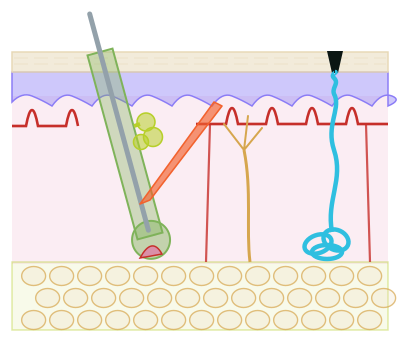
The skin, where sweat glands, hairs and blood vessels keep you at 37 °C, in the Label lab.
9

The League's test

Pass the League's test

Six exam-style questions from the League. Get all six right to earn your stamp. Three wrong and you resit.

The League's badge

League test · Hormones and plant responses

You: ♥♥♥

Press Start when you're ready.

Remember it

Tap a card to flip it. Say the answer before you flip.

Kay:That's hormones and plant responses. When I saw that snake last year I ran faster than I've ever run. Ash says that was adrenaline. I say it was talent.
Hormones and plant responses: Biology explained, with games · L.O.E.P
