15 wks to JAMB

L.O.E.P · BiologyNo. 23

Explainer · Growth and germination · about 15 min

A soaked bean doubles in size overnight. Is that growth? What really happens when a seed wakes up and becomes a plant?


Watch the lecture

Ash and Kay teach this lesson, start to finish.

⬇ Save for offline

Keeps it on this phone, so it plays with no signal and no data, at this same address.

In short

The key words in this lesson, in plain English:

Germination:
The growth of the embryo in a seed into a seedling. It needs water, oxygen and a suitable temperature.
Mitosis:
Cell division that makes two identical daughter cells with the same number of chromosomes, used for growth and repair.
Epigeal and hypogeal germination:
In epigeal germination the hypocotyl grows and lifts the cotyledons above the soil (bean, cowpea, groundnut); in hypogeal germination the epicotyl grows and the cotyledons stay below (maize, rice, mango).

Free this month: 1 of 1 lessons. A free account gives you 3 a month.

Soak a handful of beans overnight and plant them in wet cotton wool. In two days a white root pokes out; in a week there's a seedling with two green leaves; in a month, a bean plant. A baby doubles its birth weight in five months. A mango seed becomes a tree that outlives the person who planted it. This lesson is about growth: what it really is, how cells make it happen, how a seed wakes up and becomes a plant, and what speeds growth up or holds it back.

Kay:A seed swells up when you soak it. That's growth, isn't it?
1

Ash's lab · the seedlings

Measuring growth

Bean seeds planted on day 0. Each day Ash measures one seedling's height, weighs another fresh, and dries a third in an oven and weighs it. Move through the days.

Move through the days

days →heightdry mass
Height0 cmFresh mass–Dry mass–

What growth is, and how to measure it

Where you see it: clinics weigh babies and measure their length at each visit, then plot the figures on a growth chart to check that the child is growing steadily over the months. Growth is a permanent, irreversible increase in size and BiologyDry massThe mass of an organism after all its water has been driven off in an oven. It is the most reliable measure of growth, since water content goes up and down.A germinating seed's dry mass falls at first as it respires its food store.Science dictionary ▶ of an organism, as new protoplasm is made. A seed swelling with water isn't growth: dry it and it shrinks back. Height and length are easy to measure but miss width; fresh PhysicsMassThe amount of matter in something, measured in kilograms. It doesn't change from place to place.Your mass is the same on the Moon, but your weight there is about a sixth.Science dictionary ▶ goes up and down with the water a plant happens to hold. Dry mass (the mass after drying in an oven until constant) is the most reliable measure, though the seedling must be killed to get it, so many seedlings are sown and a few dried each day. A BiologyGerminationThe growth of the embryo in a seed into a seedling. It needs water, oxygen and a suitable temperature.Farmers wait for steady rains before planting so the seeds can germinate.Science dictionary ▶ seed's dry mass first falls, as it BiologyRespirationThe breakdown of food (glucose) in every living cell to release energy. Aerobic respiration uses oxygen; anaerobic respiration does not.Breathing is not respiration: breathing brings in the oxygen that respiration in your cells uses.Science dictionary ▶ away its stored food, then rises once its leaves BiologyPhotosynthesisHow green plants make food: chlorophyll traps light energy to turn carbon(IV) oxide and water into glucose, giving off oxygen.Every grain of rice and garri you eat began as sugar made by photosynthesis in a leaf.Science dictionary ▶. Plotted over a whole life, growth makes an S-shaped (sigmoid) curve.
2

Play · the root tip

Where a root grows

The tip of a growing bean root, magnified. Tap each zone, from the very tip upwards.

Tap a zone

Happening here–

How cells make growth

Where you see it: when a gardener pinches off the tip of a shoot, it stops getting longer there, because the BiologyPlant tissuesMeristem divides; parenchyma packs and stores; collenchyma, living and thickened at the corners, supports young stems; sclerenchyma, lignified and dead, gives strength; xylem and phloem transport.The epidermis covers them all, often with a waxy cuticle.Science dictionary ▶ making new cells has gone; side shoots then grow instead. Growth needs three things to happen to cells: cell division (more cells, by BiologyMitosisCell division that makes two identical daughter cells with the same number of chromosomes, used for growth and repair.A scraped elbow heals as skin cells around it divide by mitosis.Science dictionary ▶), cell enlargement (each new cell takes in water and stretches), and differentiation (cells become specialised: BiologyXylemThe plant tissue that carries water and mineral salts up from the roots. Its walls are strengthened with lignin.The tough threads left after chewing sugar cane are mostly xylem and other vascular tissue.Science dictionary ▶, root hair cells, and so on). In plants, division happens only in meristems: the tips of roots and shoots (apical meristems, for length) and the BiologySecondary thickeningGrowth in girth of a dicot stem: a ring of cambium makes new xylem (wood) inwards and phloem outwards each year, and a cork cambium makes the bark.Wet- and dry-season wood differ, so each year leaves an annual ring.Science dictionary ▶ (for width). Just behind the root cap is the zone of cell division; behind that, the zone of elongation, where the root actually lengthens fastest; then the zone of maturation, where cells differentiate and root hairs grow. In animals growth happens all over the body, though some cells, such as BiologyNeuroneA nerve cell: it carries electrical impulses. Sensory neurones bring messages in, motor neurones send instructions out.Some neurones run from your spine to your toes, about a metre long.Science dictionary ▶, stop dividing.
3

Play · in order

Mitosis, step by step

One cell becomes two identical cells. Tap the stages of mitosis in order.

What happens first?

Stages0 / 5

Mitosis

Where you see it: when a cut on a knee heals, skin cells beside the wound divide by BiologyMitosisCell division that makes two identical daughter cells with the same number of chromosomes, used for growth and repair.A scraped elbow heals as skin cells around it divide by mitosis.Science dictionary ▶, making new cells that carry exactly the same BiologyGeneA section of DNA on a chromosome that controls a particular characteristic. Genes are passed from parents to children.The gene for haemoglobin decides whether a person is AA, AS or SS.Science dictionary ▶ as the old ones. Mitosis is cell division that makes two daughter cells, each with exactly the same number and kind of BiologyChromosomeA thread-like structure of DNA and protein in the nucleus that carries genes. Human body cells have 46 (23 pairs).A sperm and an egg each bring 23 chromosomes to make the 46 of a new baby.Science dictionary ▶ as the parent, so all the body's cells carry the same genes. Interphase: the cell grows and copies its chromosomes. Prophase: the chromosomes shorten and thicken and become visible, each as two chromatids; the nuclear membrane disappears. Metaphase: they line up across the middle on the spindle. Anaphase: the chromatids are pulled apart to opposite ends. Telophase: a new BiologyNucleusA centre. In an atom, the tiny dense core of protons and neutrons that holds nearly all its mass. In a cell, the part that holds the chromosomes and controls the cell.Science dictionary ▶ forms at each end and the cytoplasm divides (a cell plate in plants, pinching in animals). Mitosis gives growth, repair and BiologyAsexual reproductionReproduction from one parent with no gametes, giving offspring identical to the parent: binary fission, budding, spores, vegetative propagation.Science dictionary ▶; BiologyMeiosisCell division that makes four cells with half the number of chromosomes, used to make gametes (eggs, sperm, pollen).Brothers and sisters differ partly because meiosis shuffles the genes in every egg and sperm.Science dictionary ▶, which halves the chromosome number, makes gametes.
4

Ash's lab · split them open

Inside a bean and a maize grain

Soak a bean seed and a maize grain, split them, and look. Choose each.

Choose a seed

Food stored in–Cotyledons–

Seeds

Where you see it: on each black-eyed bean sold in the market, the small scar at the centre of the dark eye is the BiologyParts of a seedA seed holds an embryo, the radicle (young root), plumule (young shoot) and one or two cotyledons (seed leaves), with a food store, inside a coat, the testa. The hilum is its scar of attachment.A bean keeps its food in two cotyledons; a maize grain in its endosperm.Science dictionary ▶, where the seed was joined to its pod. A seed is a BiologyFertilisationThe fusion of a male and a female gamete to form a zygote. In flowering plants a second male nucleus also forms the endosperm: double fertilisation.Science dictionary ▶ BiologyOvuleThe structure in a flower's ovary that contains the egg cell. After fertilisation it becomes the seed; the pollen tube enters it through a tiny gap, the micropyle.Science dictionary ▶: an embryo plant with a food store inside a tough coat, the testa. The hilum is the scar where it was attached to the pod; the micropyle, a tiny pore beside it, is where water first enters. The embryo has a radicle (the young root), a plumule (the young shoot) and one or two cotyledons (seed leaves). A bean is a BiologyMonocots and dicotsThe two groups of flowering plants. Dicots (bean, sunflower) have two seed leaves, bundles in a ring with cambium, and a xylem star in the root. Monocots (maize, grasses) have one seed leaf, scattered bundles and no cambium.So monocots don't thicken with wood.Science dictionary ▶: two large cotyledons hold its food. A maize grain is really a one-seeded fruit; it's a monocot with one thin cotyledon (the scutellum) and its food in a separate endosperm, as in castor oil seeds. The food is starch, BiologyProteinLarge molecules made of chains of amino acids, used to build and repair the body. Beans, fish, eggs and meat are rich in them.Science dictionary ▶ and oil.
5

Ash's lab · the test tubes

What does a seed need to germinate?

A tube of bean seeds on cotton wool. Take one condition away at a time and wait four days.

Set the conditions

Result–

Conditions for germination

Where you see it: farmers wait for the first steady rains before sowing maize, and grain in store is kept dry and cool so it does not sprout in the bag. BiologyGerminationThe growth of the embryo in a seed into a seedling. It needs water, oxygen and a suitable temperature.Farmers wait for steady rains before planting so the seeds can germinate.Science dictionary ▶ is the development of a seed's embryo into a seedling. Most seeds need three things. Water: it softens the BiologyParts of a seedA seed holds an embryo, the radicle (young root), plumule (young shoot) and one or two cotyledons (seed leaves), with a food store, inside a coat, the testa. The hilum is its scar of attachment.A bean keeps its food in two cotyledons; a maize grain in its endosperm.Science dictionary ▶, makes the seed swell, activates its BiologyEnzymeA protein that speeds up a chemical reaction in living things without being used up, like the enzymes that break down food.Most enzymes stop working if they get too hot.Science dictionary ▶ and dissolves the food so it can move to the growing radicle and plumule. Oxygen: for BiologyRespirationThe breakdown of food (glucose) in every living cell to release energy. Aerobic respiration uses oxygen; anaerobic respiration does not.Breathing is not respiration: breathing brings in the oxygen that respiration in your cells uses.Science dictionary ▶, which releases the energy for growth (seeds in boiled water under oil don't germinate). A suitable temperature: warm enough for the enzymes to work, usually 25–35 °C (seeds in a fridge stay dormant). Most seeds don't need light to germinate; they need it afterwards to make food. A seed may also be dormant and wait until conditions are right. Enzymes turn stored starch into sugar, BiologyProteinLarge molecules made of chains of amino acids, used to build and repair the body. Beans, fish, eggs and meat are rich in them.Science dictionary ▶ into amino ChemistryAcidA substance with a pH below 7 that releases hydrogen ions in water. Strong acids are corrosive; the stomach uses hydrochloric acid to digest food.Acids turn blue litmus paper red.Science dictionary ▶, and fats into fatty acids and glycerol.
6

Play · watch them come up

Epigeal and hypogeal germination

A bean and a maize grain sown side by side. Move through the days and watch how each shoot comes up.

Move through the days

beanmaize
Bean–Maize–

Two ways up

Where you see it: a week after sowing, a cowpea farm shows pairs of seed leaves held above the soil, while young maize comes up as a single pointed shoot with its grain left buried. In BiologyEpigeal and hypogeal germinationIn epigeal germination the hypocotyl grows and lifts the cotyledons above the soil (bean, cowpea, groundnut); in hypogeal germination the epicotyl grows and the cotyledons stay below (maize, rice, mango).The radicle always comes out first.Science dictionary ▶ BiologyGerminationThe growth of the embryo in a seed into a seedling. It needs water, oxygen and a suitable temperature.Farmers wait for steady rains before planting so the seeds can germinate.Science dictionary ▶ (bean, cowpea, groundnut, castor oil), the hypocotyl, the stem below the BiologyParts of a seedA seed holds an embryo, the radicle (young root), plumule (young shoot) and one or two cotyledons (seed leaves), with a food store, inside a coat, the testa. The hilum is its scar of attachment.A bean keeps its food in two cotyledons; a maize grain in its endosperm.Science dictionary ▶, grows fast, bends into a hook to protect the plumule, then straightens and lifts the cotyledons above the soil, where they turn green and BiologyPhotosynthesisHow green plants make food: chlorophyll traps light energy to turn carbon(IV) oxide and water into glucose, giving off oxygen.Every grain of rice and garri you eat began as sugar made by photosynthesis in a leaf.Science dictionary ▶ for a while before they shrivel. In hypogeal germination (maize, rice, millet, pea, mango), the epicotyl (or the plumule, protected by its sheath, the coleoptile) grows up and the cotyledons stay below the ground. Either way the radicle comes out first, through the BiologyOvuleThe structure in a flower's ovary that contains the egg cell. After fertilisation it becomes the seed; the pollen tube enters it through a tiny gap, the micropyle.Science dictionary ▶, and grows down.
7

Play · quick rounds

What speeds growth up, or holds it back?

Press Next

Five right to pass.

Right0 / 5

Factors affecting growth

Where you see it: yam shoots that sprout in a dark store are long, thin and pale, and maize farmers apply NPK fertiliser or manure so their plants do not stay stunted and yellow. Light: plants need it for food; in darkness seedlings grow tall, thin, weak and yellow, searching for light (BiologyEtiolationThe tall, thin, weak, yellow growth of a plant kept in the dark: it spends its food lengthening the stem in search of light and makes no chlorophyll.Light it and it turns green within a day or two.Science dictionary ▶). Nutrients: nitrogen, phosphorus, potassium and others for plants (stunted, yellowed leaves without nitrogen); BiologyProteinLarge molecules made of chains of amino acids, used to build and repair the body. Beans, fish, eggs and meat are rich in them.Science dictionary ▶, BiologyVitaminA substance needed in tiny amounts to keep the body healthy. Lacking one causes a deficiency disease: no vitamin C, scurvy; no vitamin D, rickets.Science dictionary ▶ and minerals for animals (BiologyKwashiorkorA disease of young children caused by too little protein in the diet, with a swollen belly, thin hair and weak muscles.Adding crayfish, soya or beans to a baby's pap helps prevent kwashiorkor.Science dictionary ▶ in children who lack protein). Water and a suitable temperature. BiologyHormoneA chemical messenger made by an endocrine gland and carried in the blood to a target organ, which it changes.Adrenaline makes your heart pound when you are frightened.Science dictionary ▶: in plants, BiologyAuxinA plant hormone made in shoot and root tips that makes cells lengthen and causes tropisms.Rooting powder for cuttings contains a synthetic auxin.Science dictionary ▶ (cell elongation), BiologyGibberellins, cytokinins, abscisic acidPlant hormones besides auxin: gibberellins lengthen stems and start germination; cytokinins make cells divide; abscisic acid keeps seeds dormant, closes stomata and helps leaves fall.Science dictionary ▶ (stem lengthening, breaking dormancy) and cytokinins (cell division); in animals, growth hormone from the BiologyPituitary glandThe pea-sized master gland under the brain. It makes growth hormone and hormones (such as TSH) that control the other endocrine glands, and is itself controlled by the hypothalamus.Science dictionary ▶ (too little in childhood causes dwarfism) and BiologyThyroxine and the thyroidThe thyroid gland in the neck makes thyroxine, which sets the rate of metabolism and growth. It needs iodine; without enough, the gland swells into a goitre.Science dictionary ▶ from the thyroid. Disease and BiologyParasiteA living thing that lives on or inside another (its host) and feeds off it, harming it.Tapeworms, lice and the malaria parasite are all parasites.Science dictionary ▶ slow growth too.
8

Exam corner

How the exam asks it

The growth and germination question, every part of it. Tap each step to reveal it.

(a) Define growth. (b) Why is dry mass the best measure of growth? (c) Describe an experiment to show that oxygen is needed for germination. (d) Distinguish between epigeal and hypogeal germination, with an example of each.

Now try the real ones

Real JAMB, WAEC and NECO past questions on this lesson (the JAMB and WAEC ones in LOEP's words). Answer them one at a time: each is marked, with the worked answer.

Start the 10 real questions ▶
  1. JAMB 2023When a dormant seed starts to grow into a seedling, the process is known as
  2. WAEC 2011Which pair of meristems makes the trunk of a tree grow wider year after year?
  3. JAMB 2020An organism can grow only when
  4. WAEC 2009Which statement about mitosis is not true?
  5. JAMB 2019Oxygen is needed by a germinating bean seed mainly because it is used to
  6. WAEC 2014A bean seed is germinating in a dark cupboard. The stored starch in its cotyledons decreases mainly because the starch is
  7. JAMB 2019Growth in organisms is made possible by all of these processes EXCEPT
  8. WAEC 2008The lengthening of roots and shoots in a growing plant results from cell division in the
  9. JAMB 2018Bean seedlings grown in a dark cupboard are tall, thin and pale. This condition is caused by
  10. JAMB 2016Which of these seeds keeps most of its stored food in the endosperm when mature?

Label it

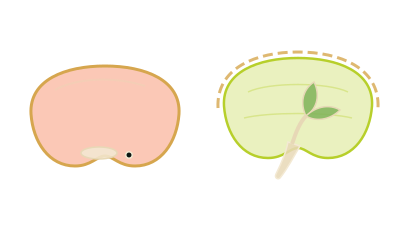
The bean seed and the maize grain, every part to name, in the Label lab.
9

The League's test

Pass the League's test

Six exam-style questions from the League. Get all six right to earn your stamp. Three wrong and you resit.

The League's badge

League test · Growth

You: ♥♥♥

Press Start when you're ready.

Remember it

Tap a card to flip it. Say the answer before you flip.

Ash:That's growth. Kay, no: a soaked bean that's only taken in water isn't growing. Dry it and it's back to its old size. Growth is new material: more cells, bigger cells, built from food. That's why we weigh it dry.
Growth and germination: Biology explained, with games · L.O.E.P