15 wks to JAMB

L.O.E.P · BiologyNo. 06

Explainer · Energy flow and nutrient cycles · about 15 min

The suya you ate last night was once sunlight. How did it get to you?

Watch the lecture

Ash and Kay teach this lesson, start to finish.

⬇ Save for offline

Keeps it on this phone, so it plays with no signal and no data, at this same address.

In short

The key words in this lesson, in plain English:

Food chain:
A feeding sequence showing how energy passes from a producer (green plant) to consumers. Linked food chains form a food web.
Ecological pyramids:
Diagrams of each feeding level stacked up. Energy pyramids are always upright, because only about 10% of the energy passes up each level; pyramids of numbers can be inverted.

Free this month: 1 of 1 lessons. A free account gives you 3 a month.

The suya you ate last night was a cow. The cow was grass. The grass was sunlight and air. Every bite of food is energy that started in the sun and has been passed along, a little lost at every step. The atoms in it, though, are never lost: the carbon in your suya has been air, grass and cow, and will be air again. Energy flows through living things; matter goes round in cycles.

Kay:So technically my suya was solar-powered. I'm putting that on the menu.
1

Play · build it

A food chain

On a farm near Ibadan: put each living thing in its place in the chain, from the one that makes the food to the top predator.

Drag each one to its link (or tap it, then the link)

  1. 1 · Producer
  2. 2 · Primary consumer (herbivore)
  3. 3 · Secondary consumer
  4. 4 · Tertiary consumer
  5. 5 · Quaternary consumer (top predator)

Food chains

Where you see it: on a maize farm, grasshoppers eat the leaves, lizards eat the grasshoppers, and hawks may catch the lizards. A BiologyFood chainA feeding sequence showing how energy passes from a producer (green plant) to consumers. Linked food chains form a food web.Grass -> ram -> people at a Sallah feast is a short food chain.Science dictionary ▶ shows who eats whom, and so the direction energy flows; the arrow means "is eaten by". It always starts with a producer, a green plant that traps the sun's energy by BiologyPhotosynthesisHow green plants make food: chlorophyll traps light energy to turn carbon(IV) oxide and water into glucose, giving off oxygen.Every grain of rice and garri you eat began as sugar made by photosynthesis in a leaf.Science dictionary ▶. Then come the consumers: primary (BiologyHerbivoreAn animal that eats only plants, like cows, goats and grasshoppers.Carnivores eat meat; omnivores eat both.Science dictionary ▶, the second BiologyTrophic levelThe feeding position of an organism in a food chain: producers first, then primary, secondary and tertiary consumers.Only about a tenth of the energy at one trophic level reaches the next.Science dictionary ▶), secondary, tertiary. Each feeding level is a trophic level. BiologyDecomposerAn organism, usually a bacterium or fungus, that breaks down dead matter and wastes, returning nutrients to the soil.A compost heap of peels and leaves becomes rich manure thanks to decomposers.Science dictionary ▶ (BiologyBacteriumA tiny single-celled organism with no true nucleus. Some cause disease (cholera, typhoid); many are useful, making yoghurt, fixing nitrogen and rotting dead matter.Science dictionary ▶, BiologyFungusAn organism with no chlorophyll that feeds by absorbing food from dead or living matter. Bodies of thread-like hyphae; includes moulds, mushrooms and yeast.Science dictionary ▶) feed on the dead remains at every level.
2

Play · pull a thread

A food web

Real animals eat more than one thing, so chains join into a web. Remove a species and watch what happens to the rest. Try three.

Tap a species to remove it

HawkSnakeToadGrasscutterGrasshopperGrass
Removed0 / 3

Food webs

Where you see it: when snakes around a farm are killed off, the rats they used to eat can increase and do more damage to crops and stored grain. A BiologyFood chainA feeding sequence showing how energy passes from a producer (green plant) to consumers. Linked food chains form a food web.Grass -> ram -> people at a Sallah feast is a short food chain.Science dictionary ▶ is a set of interlinked food chains. Because most animals have several foods, a web is more stable than a single chain: if one food runs short, a BiologyPredationOne animal (the predator) hunting, killing and eating another (the prey), as a hawk takes a chick.Science dictionary ▶ can switch. Still, removing one BiologySpeciesA group of organisms similar enough to interbreed and produce fertile offspring. It is the smallest main rank in classification.Science dictionary ▶ ripples out: its prey may boom, its predators may go hungry, and they may then eat more of something else.
3

Play · stack it

The pyramid of energy

The grass in a field traps 10 000 kJ of the sun's energy. How much reaches each level above? Then count numbers instead of energy, under one mango tree.

How much energy reaches the primary consumers?

ENERGY (not to scale)

Ecological pyramids

Where you see it: the same farmland feeds more people when its maize and beans are eaten directly than when they are fed to animals for meat, because energy is lost at each step. Only about 10% of the energy at one BiologyTrophic levelThe feeding position of an organism in a food chain: producers first, then primary, secondary and tertiary consumers.Only about a tenth of the energy at one trophic level reaches the next.Science dictionary ▶ reaches the next; the rest is used in BiologyRespirationThe breakdown of food (glucose) in every living cell to release energy. Aerobic respiration uses oxygen; anaerobic respiration does not.Breathing is not respiration: breathing brings in the oxygen that respiration in your cells uses.Science dictionary ▶ and lost as heat, spent on movement, or never eaten or BiologyDigestionBreaking food down into small molecules the body can absorb, by chewing, churning and enzymes.It starts in the mouth with saliva.Science dictionary ▶ (bones, fur, faeces). That is why BiologyFood chainA feeding sequence showing how energy passes from a producer (green plant) to consumers. Linked food chains form a food web.Grass -> ram -> people at a Sallah feast is a short food chain.Science dictionary ▶ rarely have more than four or five links, and why a BiologyEcological pyramidsDiagrams of each feeding level stacked up. Energy pyramids are always upright, because only about 10% of the energy passes up each level; pyramids of numbers can be inverted.Science dictionary ▶ is always upright. A pyramid of numbers counts organisms at each level; it can be inverted when one big producer, like a tree, feeds thousands of BiologyInsectsArthropods with three body parts (head, thorax, abdomen), three pairs of legs on the thorax, one pair of antennae and usually wings: housefly, mosquito, cockroach, grasshopper.Science dictionary ▶. A pyramid of biomass compares the BiologyDry massThe mass of an organism after all its water has been driven off in an oven. It is the most reliable measure of growth, since water content goes up and down.A germinating seed's dry mass falls at first as it respires its food store.Science dictionary ▶ at each level.
4

Play · move the carbon

The carbon cycle

Follow a carbon atom. For each event, tap where the carbon comes from, then where it goes. Get 6 right.

Press Start

Air: CO₂PlantsAnimalsDead matterFossil fuels

Press Start

Right0 / 6

The carbon cycle

Where you see it: bush burning in the dry season and cooking with firewood or charcoal release carbon(IV) oxide, while growing crops and trees take it back in by BiologyPhotosynthesisHow green plants make food: chlorophyll traps light energy to turn carbon(IV) oxide and water into glucose, giving off oxygen.Every grain of rice and garri you eat began as sugar made by photosynthesis in a leaf.Science dictionary ▶. Carbon(IV) oxide is taken out of the air by photosynthesis. It is put back by the BiologyRespirationThe breakdown of food (glucose) in every living cell to release energy. Aerobic respiration uses oxygen; anaerobic respiration does not.Breathing is not respiration: breathing brings in the oxygen that respiration in your cells uses.Science dictionary ▶ of plants, animals and BiologyDecomposerAn organism, usually a bacterium or fungus, that breaks down dead matter and wastes, returning nutrients to the soil.A compost heap of peels and leaves becomes rich manure thanks to decomposers.Science dictionary ▶, and by burning (ChemistryCombustionBurning: a fast reaction between a fuel and oxygen that gives out heat and light.Fire needs fuel, oxygen and heat: remove one and it goes out.Science dictionary ▶) of wood and fossil fuels. Carbon passes along BiologyFood chainA feeding sequence showing how energy passes from a producer (green plant) to consumers. Linked food chains form a food web.Grass -> ram -> people at a Sallah feast is a short food chain.Science dictionary ▶ through feeding. Some dead matter, buried without decay, became coal, oil and gas over millions of years. Burning fossil fuels and cutting down forests are raising the CO₂ in the air, which traps heat: BiologyGreenhouse effect and global warmingGases such as carbon(IV) oxide and methane trap the earth's heat; more of them, from burning fuels, gas flaring and deforestation, warms the planet and changes the climate.Science dictionary ▶.
5

Play · move the nitrogen

The nitrogen cycle

Plants need nitrogen to make proteins, but can't use the nitrogen gas that makes up 78% of the air. Bacteria do most of the work. Tap where the nitrogen comes from, then where it goes. Get 6 right.

Press Start

Air: N₂Plant proteinAnimal proteinAmmoniumNitritesNitrates

Press Start

Right0 / 6

The nitrogen cycle

Where you see it: farmers often plant maize on land that grew cowpea or soya beans the season before, because the bean roots leave the soil richer in nitrogen. BiologyNitrogen fixationTurning nitrogen gas from the air into compounds plants can use, done by bacteria such as Rhizobium in the root nodules of beans and groundnuts, and by lightning.Science dictionary ▶: Rhizobium in the root nodules of legumes (beans, groundnuts) and free-living soil BiologyBacteriumA tiny single-celled organism with no true nucleus. Some cause disease (cholera, typhoid); many are useful, making yoghurt, fixing nitrogen and rotting dead matter.Science dictionary ▶ turn N₂ into ChemistryCompoundTwo or more elements chemically joined in a fixed ratio, with properties different from the elements, such as water (H2O) or salt (NaCl).Poisonous chlorine and reactive sodium combine into the salt you eat.Science dictionary ▶ plants can use; lightning does it too. Plants absorb nitrates through their roots and make BiologyProteinLarge molecules made of chains of amino acids, used to build and repair the body. Beans, fish, eggs and meat are rich in them.Science dictionary ▶; animals get it by eating. BiologyDecomposerAn organism, usually a bacterium or fungus, that breaks down dead matter and wastes, returning nutrients to the soil.A compost heap of peels and leaves becomes rich manure thanks to decomposers.Science dictionary ▶ turn proteins in dead bodies and wastes into ammonium compounds. BiologyNitrificationSoil bacteria turning ammonium compounds into nitrites (Nitrosomonas) and then nitrates (Nitrobacter), which plants absorb.Science dictionary ▶ turn ammonium into nitrites (Nitrosomonas) and nitrites into nitrates (Nitrobacter). BiologyDenitrificationBacteria in waterlogged, airless soil turning nitrates back into nitrogen gas, which takes nitrogen out of the soil.Science dictionary ▶, in waterlogged soil without air, turn nitrates back into nitrogen gas. That's why farmers plant legumes and drain their fields.
6

Ash's lab

What makes things rot?

Ash puts the same mass of leaves in bags under different conditions for two weeks. Find the conditions that make them rot fastest.

Set the conditions, then wait two weeks

Mass rotted away–

Decomposers

Where you see it: a compost heap of leaves, peels and animal dung in a school garden, kept damp and turned to let air in, rots into dark manure that feeds the soil. BiologyDecomposerAn organism, usually a bacterium or fungus, that breaks down dead matter and wastes, returning nutrients to the soil.A compost heap of peels and leaves becomes rich manure thanks to decomposers.Science dictionary ▶, BiologyBacteriumA tiny single-celled organism with no true nucleus. Some cause disease (cholera, typhoid); many are useful, making yoghurt, fixing nitrogen and rotting dead matter.Science dictionary ▶ and BiologyFungusAn organism with no chlorophyll that feeds by absorbing food from dead or living matter. Bodies of thread-like hyphae; includes moulds, mushrooms and yeast.Science dictionary ▶, feed on dead matter and wastes, releasing CO₂ and BiologyMineral saltsElements such as iron, calcium and iodine, needed in small amounts by animals (and nitrates, phosphates and magnesium by plants).Science dictionary ▶ back into the air and soil for plants to reuse. Without them, nutrients would be locked away in dead bodies. They work fastest when it is warm (but not hot enough to kill them), moist, and has plenty of oxygen. Cold (a fridge), dryness (dried fish), heat (cooking) and keeping out air (BiologyFood preservationKeeping food from going bad by stopping the micro-organisms that spoil it: drying, smoking, salting or sugaring (removing water), refrigerating (cold), canning (killing and sealing), pickling (acid) or adding preservatives.Sun-dried fish and garri keep because microbes can't grow without water.Science dictionary ▶) all slow decay: that's how food is preserved.
7

Play · quick rounds

Living together

Species affect each other in different ways. Name each relationship. Get 6 right.

Press Start

–

Right0 / 6

Relationships between species

Where you see it: farmers weed their farms because weeds compete with crops for light, water and nutrients, and they pick ticks off cattle because ticks are BiologyParasiteA living thing that lives on or inside another (its host) and feeds off it, harming it.Tapeworms, lice and the malaria parasite are all parasites.Science dictionary ▶. BiologySymbiosisTwo different species living closely together. In mutualism both gain; in commensalism one gains and the other is unaffected.Bacteria in groundnut root nodules give the plant nitrogen and get food in return.Science dictionary ▶: both gain (BiologyNitrogen fixationTurning nitrogen gas from the air into compounds plants can use, done by bacteria such as Rhizobium in the root nodules of beans and groundnuts, and by lightning.Science dictionary ▶ and beans; the BiologyAlgaeSimple plant-like living things that make their own food by photosynthesis. They range from single cells to long seaweeds, and turn still water green.Algae make a large share of the oxygen we breathe.Science dictionary ▶ and BiologyFungusAn organism with no chlorophyll that feeds by absorbing food from dead or living matter. Bodies of thread-like hyphae; includes moulds, mushrooms and yeast.Science dictionary ▶ in a lichen). Commensalism: one gains, the other is unaffected (cattle egrets and cows). Parasitism: one gains, living on or in the other and harming it (ticks, BiologyFlatwormsFlat, ribbon-like worms (Platyhelminthes). Many are parasites: the pork tapeworm grips the gut with the hooks and suckers on its scolex and grows new segments (proglottids) behind it.Science dictionary ▶, Loranthus on orange trees). BiologyPredationOne animal (the predator) hunting, killing and eating another (the prey), as a hawk takes a chick.Science dictionary ▶: one kills and eats the other. BiologyCompetitionThe struggle between organisms for a resource in short supply, such as food, water, light, space or mates. Intraspecific is within one species; interspecific is between species.Weeds compete with crops for light, water and minerals.Science dictionary ▶: both need the same limited thing (food, light, space), and both lose something. BiologySaprophyteAn organism, such as many fungi and bacteria, that feeds on dead or decaying matter by digesting it outside its body and absorbing the products.Science dictionary ▶ (many fungi) feed on dead matter.
8

Exam corner

How the exam asks it

An explanation question. Tap each step to reveal it.

Explain why food chains rarely have more than four or five trophic levels.

Now try the real ones

Real JAMB, WAEC and NECO past questions on this lesson (the JAMB and WAEC ones in LOEP's words). Answer them one at a time: each is marked, with the worked answer.

Start the 10 real questions ▶
  1. JAMB 2023Rhizobium bacteria in the root nodules of beans change atmospheric nitrogen into a form plants can use. This process is called
  2. WAEC 2003The foul rotten-egg smell from decaying proteins is caused by which gas?
  3. JAMB 2023A trophic level is
  4. WAEC 2019Rhizobium bacteria in root nodules of beans change nitrogen gas from the air into nitrogen compounds. This process is called
  5. JAMB 2022A tick feeds on the blood of a dog and harms it. This relationship is
  6. WAEC 2019If the habitat of an organism is its address, then its way of life and the role it plays in the community is its
  7. JAMB 2018In a food chain, which organism feeds directly on green plants and is therefore a primary consumer?
  8. WAEC 2001Bacteria and fungi in a compost heap digest dead leaves and absorb the nutrients released. In a food web, what role do these organisms play?
  9. JAMB 2019Lightning during a thunderstorm helps crops because it
  10. JAMB 2017A food chain shows who eats whom among the living things of a

Label it

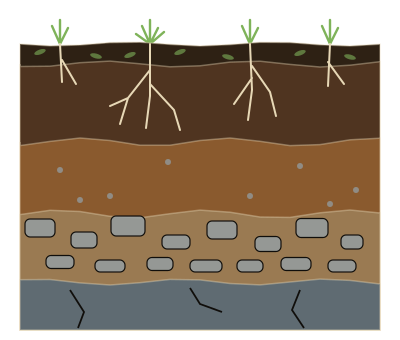
The soil profile, where decomposers do their work and humus forms, in the Label lab.
9

The League's test

Pass the League's test

Six exam-style questions from the League. Get all six right to earn your stamp. Three wrong and you resit.

The League's badge

League test · Energy flow and cycles

You: ♥♥♥

Press Start when you're ready.

Remember it

Tap a card to flip it. Say the answer before you flip.

Kay:That's energy flow and cycles. The carbon in your body has been dinosaur, probably. Treat it with respect.
Energy flow and nutrient cycles: Biology explained, with games

