15 wks to JAMB

L.O.E.P · BiologyNo. 10

Explainer · Classification: animals · about 15 min

A bat flies like a bird and a dolphin swims like a fish, but both are mammals. How are animals really grouped?


Watch the lecture

Ash and Kay teach this lesson, start to finish.

⬇ Save for offline

Keeps it on this phone, so it plays with no signal and no data, at this same address.

In short

The key words in this lesson, in plain English:

Phylum:
The big group below a kingdom, of organisms sharing a basic body plan: Arthropoda, Mollusca, Chordata. Kingdom → phylum → class → order → family → genus → species.
Arthropods:
The biggest animal phylum: jointed legs, a segmented body and a hard outer skeleton of chitin, shed as they grow. Insects, arachnids, crustaceans and myriapods.
Insects:
Arthropods with three body parts (head, thorax, abdomen), three pairs of legs on the thorax, one pair of antennae and usually wings: housefly, mosquito, cockroach, grasshopper.
Vertebrates and invertebrates:
Vertebrates have a backbone (vertebral column): fish, amphibians, reptiles, birds, mammals, in the phylum Chordata. Invertebrates have none: sponges, worms, molluscs, arthropods and the rest.

Free this month: 1 of 1 lessons. A free account gives you 3 a month.

A fruit bat flies like a bird, but it's a mammal. A dolphin swims like a fish, but it's a mammal too. A spider runs about like an insect, but it isn't one. Animals aren't grouped by how they look from far away or where they live; they're grouped by how their bodies are built: a backbone or not, legs that bend at joints, segments, scales, feathers, fur. Learn the features and every animal finds its place.

Kay:I called a spider an insect in JSS2 and Ash has never let it go. Four pairs of legs, apparently. I counted. She's right.
1

Play · arcade

Backbone or not?

Press Start

Swipe left for a vertebrate, right for an invertebrate

Score0Streak0Lives♥♥♥

The animal kingdom

Where you see it: a fish seller cutting up a catfish finds a backbone running down the middle, while the snails and crabs on the next stall have none. Animals are many-celled, have no cell walls and no BiologyChlorophyllThe green pigment in chloroplasts that absorbs light energy for photosynthesis. Each molecule has a magnesium atom at its centre.Ugu and bitter leaf are green because of their chlorophyll.Science dictionary ▶, and feed on other living things. The first split is the backbone (BiologyVertebrates and invertebratesVertebrates have a backbone (vertebral column): fish, amphibians, reptiles, birds, mammals, in the phylum Chordata. Invertebrates have none: sponges, worms, molluscs, arthropods and the rest.Science dictionary ▶). Vertebrates, in the BiologyPhylumThe big group below a kingdom, of organisms sharing a basic body plan: Arthropoda, Mollusca, Chordata. Kingdom → phylum → class → order → family → genus → species.Science dictionary ▶ Chordata, have one: fish, BiologyAmphibiansCold-blooded vertebrates with moist skin and no scales, laying eggs in water; the young (tadpoles) breathe with gills, the adults with lungs and skin: toads and frogs.Science dictionary ▶, BiologyReptilesCold-blooded vertebrates with dry, scaly skin and lungs, laying leathery-shelled eggs on land: lizards, snakes, crocodiles, tortoises.Science dictionary ▶, birds and BiologyMammalsWarm-blooded vertebrates with hair or fur and mammary glands that feed the young on milk; most also have external ear flaps and different kinds of teeth. Bats, whales and humans.Science dictionary ▶. Invertebrates don't, and they're most of the animal BiologyKingdomThe largest group in classification. Living things fall into five: Monera (bacteria), Protista (single cells with a nucleus), Fungi, Plantae and Animalia.Science dictionary ▶: BiologySponges (Porifera)The simplest animals: a body full of pores that water is drawn through for food, with no nerves or organs, fixed in one place.Science dictionary ▶, the BiologyCnidarians (coelenterates)Water animals with a body wall of two cell layers, a ring of tentacles with stinging cells, and radial symmetry: Hydra, jellyfish, sea anemones, corals.Science dictionary ▶ and jellyfish, BiologyFlatwormsFlat, ribbon-like worms (Platyhelminthes). Many are parasites: the pork tapeworm grips the gut with the hooks and suckers on its scolex and grows new segments (proglottids) behind it.Science dictionary ▶, BiologyRoundworms (nematodes)Round, smooth, unsegmented worms pointed at both ends. Parasites include Ascaris (eggs on dirty hands and food), hookworm (through bare feet) and filarial worms (by mosquitoes).Science dictionary ▶, BiologyAnnelids (segmented worms)Worms whose bodies are divided into ring-like segments, with bristles (chaetae) for moving: the earthworm, which mixes and airs the soil, and the leech.Science dictionary ▶, BiologyMolluscsAnimals with a soft, unsegmented body, a muscular foot and a mantle that often makes a shell of calcium carbonate: snails, slugs, mussels, squid, octopus.Science dictionary ▶ and the BiologyArthropodsThe biggest animal phylum: jointed legs, a segmented body and a hard outer skeleton of chitin, shed as they grow. Insects, arachnids, crustaceans and myriapods.Science dictionary ▶.
2

Play · the key

Key it to its phylum

A dichotomous key asks yes-or-no questions about features you can see. Answer them for each animal until you reach its phylum. Key out four.

Press New animal

–

Press New animal

Keyed out0 / 4

The invertebrate phyla

Where you see it: snail farmers rear the giant African land snail, a BiologyMolluscsAnimals with a soft, unsegmented body, a muscular foot and a mantle that often makes a shell of calcium carbonate: snails, slugs, mussels, squid, octopus.Science dictionary ▶ with a soft body and a coiled shell, and sell it in the market for its meat. BiologySponges (Porifera)The simplest animals: a body full of pores that water is drawn through for food, with no nerves or organs, fixed in one place.Science dictionary ▶ (sponges): a body full of pores, no nerves. BiologyCnidarians (coelenterates)Water animals with a body wall of two cell layers, a ring of tentacles with stinging cells, and radial symmetry: Hydra, jellyfish, sea anemones, corals.Science dictionary ▶ (Hydra, jellyfish): a body wall of two cell layers, tentacles with stinging cells, radial symmetry. BiologyFlatwormsFlat, ribbon-like worms (Platyhelminthes). Many are parasites: the pork tapeworm grips the gut with the hooks and suckers on its scolex and grows new segments (proglottids) behind it.Science dictionary ▶ (flatworms: tapeworm, liver fluke, planarian): flat and ribbon-like. BiologyRoundworms (nematodes)Round, smooth, unsegmented worms pointed at both ends. Parasites include Ascaris (eggs on dirty hands and food), hookworm (through bare feet) and filarial worms (by mosquitoes).Science dictionary ▶ (roundworms: Ascaris, hookworm): round, unsegmented, pointed at both ends. BiologyAnnelids (segmented worms)Worms whose bodies are divided into ring-like segments, with bristles (chaetae) for moving: the earthworm, which mixes and airs the soil, and the leech.Science dictionary ▶ (earthworm, leech): a body of ring-like segments. Mollusca (snails, slugs, squid): a soft unsegmented body, a muscular foot, often a shell of ChemistryCalciumA metal element (Ca) that our bones and teeth are built from. We get it from milk, beans and green vegetables.Chalk and limestone are calcium carbonate.Science dictionary ▶ carbonate. BiologyArthropodsThe biggest animal phylum: jointed legs, a segmented body and a hard outer skeleton of chitin, shed as they grow. Insects, arachnids, crustaceans and myriapods.Science dictionary ▶: jointed legs and a hard chitin exoskeleton.
3

Play · quick rounds

Which kind of arthropod?

Press Next

–

Right0 / 5

The arthropod classes

Where you see it: in a grain store, the weevils boring into stored beans have six legs and antennae, so they are BiologyInsectsArthropods with three body parts (head, thorax, abdomen), three pairs of legs on the thorax, one pair of antennae and usually wings: housefly, mosquito, cockroach, grasshopper.Science dictionary ▶; the spiders in the corners have eight legs and no antennae. Insects (housefly, cockroach, mosquito, grasshopper): three body parts (head, thorax, abdomen), three pairs of legs, one pair of antennae, usually wings. BiologyArachnidsArthropods with two body parts, four pairs of legs and no antennae or wings: spiders, scorpions, ticks and mites.Science dictionary ▶ (spiders, scorpions, ticks): two body parts, four pairs of legs, no antennae. BiologyCrustaceansMostly water-living arthropods with two pairs of antennae, gills and a hard shell: crabs, shrimps, crayfish, prawns.Science dictionary ▶ (crab, shrimp, crayfish): two pairs of antennae, gills, a hard shell, mostly in water. BiologyMyriapodsArthropods with long bodies of many segments. A centipede has one pair of legs on each and poison claws; a millipede has two pairs on each and none.Science dictionary ▶: long bodies of many segments; a centipede has one pair of legs on each and poison claws, a millipede two pairs and no claws.
4

Play · build it

Build an insect, then a spider

Change the body until it's a proper insect. Then rebuild it as a spider.

Build an insect

Built0 / 2
Ash:The thorax is the middle part, and it's where an insect's legs and wings are joined on: three segments, one pair of legs each.
5

Play · clue by clue

Which class of vertebrate?

A mystery vertebrate. Read the clues one at a time and name its class as soon as you're sure. Get four right.

Press New animal

    Clues used0Right0 / 4

    The five classes

    Where you see it: on a mixed farm, the hens lay hard-shelled eggs, while the goats in the next pen give birth to live kids and feed them on milk. Fish: scales, fins, gills; tilapia and catfish (sharks have cartilage, not bone). BiologyAmphibiansCold-blooded vertebrates with moist skin and no scales, laying eggs in water; the young (tadpoles) breathe with gills, the adults with lungs and skin: toads and frogs.Science dictionary ▶: moist skin without scales, eggs laid in water, tadpoles with gills, adults with lungs; toads and frogs. BiologyReptilesCold-blooded vertebrates with dry, scaly skin and lungs, laying leathery-shelled eggs on land: lizards, snakes, crocodiles, tortoises.Science dictionary ▶: dry, scaly skin, lungs, leathery-shelled eggs laid on land; agama lizards, snakes, crocodiles, tortoises. Birds: feathers, a beak with no teeth, wings, hard-shelled eggs. BiologyMammalsWarm-blooded vertebrates with hair or fur and mammary glands that feed the young on milk; most also have external ear flaps and different kinds of teeth. Bats, whales and humans.Science dictionary ▶: hair or fur, mammary glands that feed the young on milk, external ear flaps, and different kinds of teeth; bats, whales and dolphins are mammals.
    6

    Play · the thermometer

    Warm-blooded or cold-blooded?

    Four animals in a room. Change the air temperature and watch their bodies. Then pick the two that keep their own temperature.

    Change the air temperature

    –Air–Lizard–Goat–Toad–Pigeon

    Body temperature

    Where you see it: poultry farmers keep day-old chicks in a warm brooder under a heater or lamp until their feathers grow, because young chicks cannot yet hold their body heat well. Birds and BiologyMammalsWarm-blooded vertebrates with hair or fur and mammary glands that feed the young on milk; most also have external ear flaps and different kinds of teeth. Bats, whales and humans.Science dictionary ▶ are BiologyWarm- and cold-bloodedBirds and mammals are homoiothermic (warm-blooded): they keep a steady body temperature. Fish, amphibians and reptiles are poikilothermic (cold-blooded): their bodies follow the surroundings.Science dictionary ▶ (warm-blooded): they keep a steady body temperature (about 37 °C in us, 41 °C in birds) whatever the weather, using food energy, and feathers, fur or fat to hold the heat. Fish, BiologyAmphibiansCold-blooded vertebrates with moist skin and no scales, laying eggs in water; the young (tadpoles) breathe with gills, the adults with lungs and skin: toads and frogs.Science dictionary ▶ and BiologyReptilesCold-blooded vertebrates with dry, scaly skin and lungs, laying leathery-shelled eggs on land: lizards, snakes, crocodiles, tortoises.Science dictionary ▶ are poikilothermic (cold-blooded): their bodies follow the surroundings, which is why an agama lizard basks on a hot wall in the morning before it can run fast.
    7

    Play · quick rounds

    How the worms get in

    Press Next

    How does it get into the body?

    Right0 / 4

    Parasitic worms and health

    Where you see it: schools and clinics run deworming days, when children are given tablets against BiologyRoundworms (nematodes)Round, smooth, unsegmented worms pointed at both ends. Parasites include Ascaris (eggs on dirty hands and food), hookworm (through bare feet) and filarial worms (by mosquitoes).Science dictionary ▶ and hookworms picked up from soil and dirty hands. The pork BiologyFlatwormsFlat, ribbon-like worms (Platyhelminthes). Many are parasites: the pork tapeworm grips the gut with the hooks and suckers on its scolex and grows new segments (proglottids) behind it.Science dictionary ▶ (Taenia solium) is a flatworm caught from undercooked pork; its head (scolex) has hooks and suckers to grip the gut, and new segments (proglottids) grow just behind it. Ascaris, a roundworm, comes from eggs on unwashed hands or vegetables. Hookworm larvae bore in through bare feet on damp soil. Guinea worm comes from drinking unfiltered pond water. Filarial worms (Wuchereria), spread by mosquitoes, cause elephantiasis. Cooking meat well, washing hands, wearing shoes and drinking clean water break each one.
    8

    Exam corner

    How the exam asks it

    A compare-and-classify question. Tap each step to reveal it.

    (a) Name the phylum that a housefly and a spider both belong to, and give two features of it. (b) State three differences between the housefly and the spider. (c) A fruit bat flies. Give the class it belongs to and two reasons.

    Now try the real ones

    Real JAMB, WAEC and NECO past questions on this lesson (the JAMB and WAEC ones in LOEP's words). Answer them one at a time: each is marked, with the worked answer.

    Start the 10 real questions ▶
    1. JAMB 2023Which feature is typical of arthropods such as insects and crabs?
    2. WAEC 2019The hard shell of a snail is made mostly of the compound
    3. JAMB 2021Arrange these vertebrates from the least to the most advanced in evolution: I. goat, II. catfish, III. lizard, IV. frog.
    4. WAEC 2018In an insect such as a grasshopper, which segment of the thorax carries legs only and no wings?
    5. JAMB 2021Tapeworms and roundworms are called invertebrates because they
    6. WAEC 2017Which of these animals has no nerve cells at all?
    7. JAMB 2021An animal has a backbone, a dry scaly skin, teeth and lays eggs with leathery shells on land. It is most likely a
    8. WAEC 2009Two donkeys mate and produce fertile young. Organisms that can interbreed like this to give fertile offspring belong to the same
    9. JAMB 2021Which class of animals has the greatest number of species?
    10. JAMB 2019Which of the following is NOT a part of a single bird feather?

    Label it

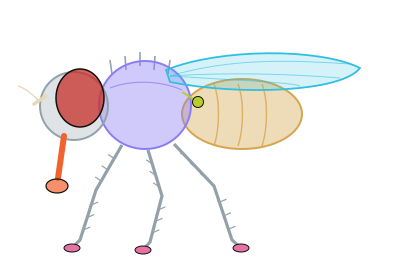
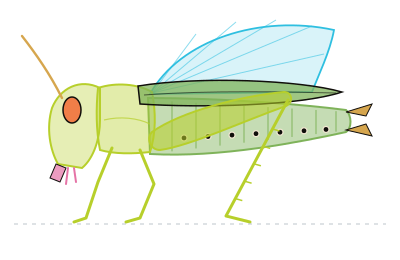
    The grasshopper and the housefly, two insects to label part by part, in the Label lab.
    9

    The League's test

    Pass the League's test

    Six exam-style questions from the League. Get all six right to earn your stamp. Three wrong and you resit.

    The League's badge

    League test · Classification of animals

    You: ♥♥♥

    Press Start when you're ready.

    Remember it

    Tap a card to flip it. Say the answer before you flip.

    Kay:That's the animal kingdom. I now know the bat in our roof is a mammal. It still won't pay rent.
    Classification: animals: Biology explained, with games · L.O.E.P