15 wks to JAMB

L.O.E.P · BiologyNo. 07

Explainer · Classification: microbes, fungi and plants · about 15 min

The vet, the farmer and the doctor all need to know exactly which worm, weed or germ they're facing. With two million kinds of living thing, how do biologists sort them all?


Watch the lecture

Ash and Kay teach this lesson, start to finish.

⬇ Save for offline

Keeps it on this phone, so it plays with no signal and no data, at this same address.

In short

The key words in this lesson, in plain English:

Fungus:
An organism with no chlorophyll that feeds by absorbing food from dead or living matter. Bodies of thread-like hyphae; includes moulds, mushrooms and yeast.
Kingdom:
The largest group in classification. Living things fall into five: Monera (bacteria), Protista (single cells with a nucleus), Fungi, Plantae and Animalia.
Virus:
Genetic material in a protein coat, far smaller than a bacterium. It shows no signs of life outside a living cell but multiplies inside one. Causes measles, polio and HIV.
Monocots and dicots:
The two groups of flowering plants. Dicots (bean, sunflower) have two seed leaves, bundles in a ring with cambium, and a xylem star in the root. Monocots (maize, grasses) have one seed leaf, scattered bundles and no cambium.

Free this month: 1 of 1 lessons. A free account gives you 3 a month.

Walk through any big market and nothing is random: yams with yams, peppers with peppers, fabric in one line, phones in another. You can find anything because similar things are grouped together. Biologists do the same with about two million known kinds of living thing, from bacteria you can't see to the iroko tree. That grouping is classification.

Kay:So biologists are just very organised market women. With microscopes.
1

Play · climb it

Ranks and names

First put the ranks in order, from the biggest group down to a single kind of organism. Then pick the correctly written scientific names.

Tap the biggest group first

    Names right0 / 3

    Classification and naming

    Where you see it: cassava has different names in Hausa, Yoruba and Igbo, but researchers everywhere call it Manihot esculenta, so they know they mean the same plant. Living things are grouped by their similarities and differences into ranks: BiologyKingdomThe largest group in classification. Living things fall into five: Monera (bacteria), Protista (single cells with a nucleus), Fungi, Plantae and Animalia.Science dictionary ▶, BiologyPhylumThe big group below a kingdom, of organisms sharing a basic body plan: Arthropoda, Mollusca, Chordata. Kingdom → phylum → class → order → family → genus → species.Science dictionary ▶ (division, for plants), class, order, family, genus, BiologySpeciesA group of organisms similar enough to interbreed and produce fertile offspring. It is the smallest main rank in classification.Science dictionary ▶. A species is a group whose members can interbreed and produce fertile offspring. Every species has a two-part BiologyBinomial systemLinnaeus's two-part naming: genus with a capital letter, then species, in italics (underlined when handwritten). Maize is Zea mays.Science dictionary ▶, the binomial system of Linnaeus: genus first, with a capital letter, then species, all lower case, printed in italics (underlined when handwritten). Maize is Zea mays; oil palm is Elaeis guineensis.
    2

    Play · sort them

    The five kingdoms

    Put each organism into its kingdom.

    Drag each one to its kingdom (or tap it, then the kingdom)

    Monerano nucleus
    Protistaone cell, with a nucleus
    Fungihyphae or yeast cells, no chlorophyll
    Plantaemany cells, chlorophyll, cellulose walls
    Animaliamany cells, no cell walls, eat food

    The kingdoms

    Where you see it: in one kitchen, the BiologyBacteriumA tiny single-celled organism with no true nucleus. Some cause disease (cholera, typhoid); many are useful, making yoghurt, fixing nitrogen and rotting dead matter.Science dictionary ▶ that sour ogi, the yeast that raises bread dough and the maize grain itself come from three different BiologyKingdomThe largest group in classification. Living things fall into five: Monera (bacteria), Protista (single cells with a nucleus), Fungi, Plantae and Animalia.Science dictionary ▶: Monera, BiologyFungusAn organism with no chlorophyll that feeds by absorbing food from dead or living matter. Bodies of thread-like hyphae; includes moulds, mushrooms and yeast.Science dictionary ▶ and Plantae. Monera (bacteria): single cells with no true BiologyNucleusA centre. In an atom, the tiny dense core of protons and neutrons that holds nearly all its mass. In a cell, the part that holds the chromosomes and controls the cell.Science dictionary ▶ and no membrane-bound organelles. Protista: single cells with a nucleus, such as BiologyProtistA single-celled organism with a nucleus, in the kingdom Protista: Amoeba (moves by pseudopodia), Paramecium (cilia) and Euglena (a flagellum and chloroplasts).Science dictionary ▶, Paramecium and Euglena. Fungi: no BiologyChlorophyllThe green pigment in chloroplasts that absorbs light energy for photosynthesis. Each molecule has a magnesium atom at its centre.Ugu and bitter leaf are green because of their chlorophyll.Science dictionary ▶; they feed on dead or living matter by absorbing it; bodies of thread-like BiologyHyphaOne of the thread-like filaments that make up the body of a fungus; a mass of them is a mycelium.Science dictionary ▶ (or single yeast cells), with cell walls of BiologyArthropodsThe biggest animal phylum: jointed legs, a segmented body and a hard outer skeleton of chitin, shed as they grow. Insects, arachnids, crustaceans and myriapods.Science dictionary ▶. Plantae: many cells, chlorophyll, BiologyCelluloseThe tough material in plant cell walls. Most animals can't digest it; ruminants rely on microbes to break it down.Paper and cotton are mostly cellulose.Science dictionary ▶ cell walls. Animalia: many cells, no cell walls, take in food.
    3

    Play · test it

    Is a virus alive?

    Check the seven signs of life for a virus: first floating outside a cell, then inside a host cell.

    Pick where the virus is

    • Movement
    • Respiration
    • Sensitivity
    • Growth
    • Reproduction
    • Excretion
    • Nutrition
    Signs of life–

    Viruses

    Where you see it: BiologyVaccineA harmless form of a germ, or part of one, given so that the body makes antibodies in advance and is protected from the disease.Babies are vaccinated against measles and polio at clinics across Nigeria.Science dictionary ▶ clinics vaccinate babies against measles and polio, because these are BiologyVirusGenetic material in a protein coat, far smaller than a bacterium. It shows no signs of life outside a living cell but multiplies inside one. Causes measles, polio and HIV.Science dictionary ▶ diseases that BiologyAntibioticA drug, first found in fungi and bacteria, that kills bacteria or stops them growing. It does not cure viral diseases.Taking antibiotics for a cold does no good and helps bacteria become resistant.Science dictionary ▶ cannot treat. A virus is a strand of BiologyGeneA section of DNA on a chromosome that controls a particular characteristic. Genes are passed from parents to children.The gene for haemoglobin decides whether a person is AA, AS or SS.Science dictionary ▶ material (BiologyDNAThe double-helix molecule that carries hereditary information. Its bases pair A with T and G with C, so it can copy itself.DNA tests used in hospitals and courts read the order of these bases.Science dictionary ▶ or RNA) in a BiologyProteinLarge molecules made of chains of amino acids, used to build and repair the body. Beans, fish, eggs and meat are rich in them.Science dictionary ▶ coat, far smaller than a BiologyBacteriumA tiny single-celled organism with no true nucleus. Some cause disease (cholera, typhoid); many are useful, making yoghurt, fixing nitrogen and rotting dead matter.Science dictionary ▶. Outside a living cell it shows no signs of life: it doesn't feed, BiologyRespirationThe breakdown of food (glucose) in every living cell to release energy. Aerobic respiration uses oxygen; anaerobic respiration does not.Breathing is not respiration: breathing brings in the oxygen that respiration in your cells uses.Science dictionary ▶, grow or BiologyExcretionThe removal of waste made by the body's own chemical reactions, such as carbon(IV) oxide and urea. Passing out undigested food is egestion, not excretion.Breathing out and urinating are excretion; passing faeces is egestion.Science dictionary ▶, and can even be ChemistryCrystallisationGetting a dissolved solid back as crystals: heat the solution until it is saturated, then let it cool so crystals grow. Purer than evaporating to dryness, because soluble impurities stay in the liquid.Copper(II) sulphate and salt crystals are made this way.Science dictionary ▶. Inside a host cell it takes over the cell's machinery to make copies of itself. So viruses sit on the boundary between living and non-living, and aren't placed in any BiologyKingdomThe largest group in classification. Living things fall into five: Monera (bacteria), Protista (single cells with a nucleus), Fungi, Plantae and Animalia.Science dictionary ▶. They cause diseases such as measles, polio, yellow BiologyFeverA body temperature above normal (about 37 °C), usually the body's response to an infection.A high fever in a malaria area should always be tested.Science dictionary ▶, HIV/AIDS and the common cold; antibiotics don't work on them.
    4

    Play · under the microscope

    Life in a drop of water

    Look at each organism under the microscope and answer how it moves and how it feeds. Get 6 right.

    Press Start

    Right0 / 6

    Microbes

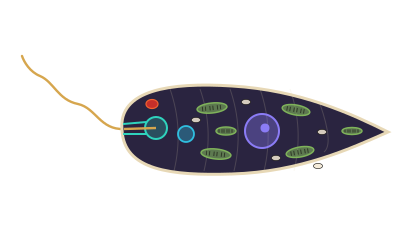
    Where you see it: a drop of water from a pond or BiologyStagnant waterStill water that doesn't flow, like puddles or open tanks. Mosquitoes lay their eggs in it.Covering water containers cuts mosquito breeding.Science dictionary ▶ gutter, viewed under the school lab microscope, often shows BiologyProtistA single-celled organism with a nucleus, in the kingdom Protista: Amoeba (moves by pseudopodia), Paramecium (cilia) and Euglena (a flagellum and chloroplasts).Science dictionary ▶ and other single-celled organisms moving about. Amoeba moves and feeds with BiologyPseudopodiumA flowing extension of an Amoeba's cell used to move and to engulf food.Science dictionary ▶, flowing extensions that surround food (phagocytosis). Paramecium is covered in beating BiologyCilia and flagellaHair-like threads that beat to move a cell or move liquid past it: many short cilia on Paramecium, one long whip-like flagellum on Euglena.Science dictionary ▶. Euglena swims with a whip-like flagellum, has an eyespot to detect light, and has BiologyChloroplastThe organelle in plant cells where photosynthesis happens. It contains chlorophyll.Palisade cells just under the top of a leaf are packed with chloroplasts to catch the light.Science dictionary ▶, so it can make food like a plant and absorb it like an animal. BiologySpirogyraA green alga made of long threads (filaments) of cells, each with a spiral chloroplast. It forms slimy green mats in ponds.Science dictionary ▶ is a filamentous green BiologyAlgaeSimple plant-like living things that make their own food by photosynthesis. They range from single cells to long seaweeds, and turn still water green.Algae make a large share of the oxygen we breathe.Science dictionary ▶ with spiral chloroplasts. BiologyBacteriumA tiny single-celled organism with no true nucleus. Some cause disease (cholera, typhoid); many are useful, making yoghurt, fixing nitrogen and rotting dead matter.Science dictionary ▶ are useful (yoghurt, BiologyNitrogen fixationTurning nitrogen gas from the air into compounds plants can use, done by bacteria such as Rhizobium in the root nodules of beans and groundnuts, and by lightning.Science dictionary ▶, BiologySewageWaste water carrying faeces and urine. Untreated, it spreads cholera, typhoid and dysentery and feeds algal blooms; treatment works use bacteria to break it down.Science dictionary ▶ treatment, decay) and harmful (BiologyCholeraA disease of severe diarrhoea caused by Vibrio bacteria in water or food dirtied with faeces. Prevented by clean water, good toilets and handwashing; treated with oral rehydration.Science dictionary ▶, BiologyTyphoidA bacterial fever spread in food and water dirtied with faeces, often by houseflies. Prevented by clean water, covering food, good sanitation and vaccination.Science dictionary ▶, BiologyTuberculosis (TB)A bacterial disease, mostly of the lungs, spread in droplets from coughs and sneezes. Prevented by the BCG vaccine and good ventilation; cured with a long course of antibiotics.Science dictionary ▶).
    5

    Ash's lab

    Grow bread mould

    Ash leaves slices of bread in different conditions for five days. Find what mould needs to grow fast, and find out whether it needs light.

    Set the conditions, then wait five days

      Mould cover–

      Fungi

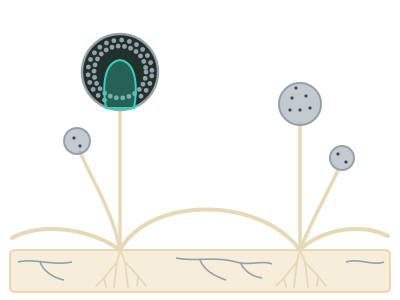
      Where you see it: damp stored grain or groundnuts can grow BiologyFungusAn organism with no chlorophyll that feeds by absorbing food from dead or living matter. Bodies of thread-like hyphae; includes moulds, mushrooms and yeast.Science dictionary ▶, which is why farmers dry their produce well before bagging and storing it. Bread mould (Rhizopus) is made of a PhysicsMassThe amount of matter in something, measured in kilograms. It doesn't change from place to place.Your mass is the same on the Moon, but your weight there is about a sixth.Science dictionary ▶ of white threads called BiologyHyphaOne of the thread-like filaments that make up the body of a fungus; a mass of them is a mycelium.Science dictionary ▶ (together, the mycelium). Some grow up and form black BiologySporeA tiny reproductive cell that can grow into a new organism on its own. Fungi make them in sporangia; ferns under their leaves.Science dictionary ▶ full of spores, which blow away to start new moulds. Fungi have no BiologyChlorophyllThe green pigment in chloroplasts that absorbs light energy for photosynthesis. Each molecule has a magnesium atom at its centre.Ugu and bitter leaf are green because of their chlorophyll.Science dictionary ▶, so they don't need light; they feed by releasing BiologyEnzymeA protein that speeds up a chemical reaction in living things without being used up, like the enzymes that break down food.Most enzymes stop working if they get too hot.Science dictionary ▶ onto food and absorbing the products: they are BiologySaprophyteAn organism, such as many fungi and bacteria, that feeds on dead or decaying matter by digesting it outside its body and absorbing the products.Science dictionary ▶ (feeding on dead matter) or BiologyParasiteA living thing that lives on or inside another (its host) and feeds off it, harming it.Tapeworms, lice and the malaria parasite are all parasites.Science dictionary ▶. They need moisture, warmth and food. Mushrooms, yeast (used for bread and brewing) and the moulds that spoil food are all fungi.
      6

      Play · quick rounds

      The plant groups

      From the simplest to the most advanced: read each description and name the group. Get 5 right.

      Press Start

      –

      Right0 / 5

      From algae to flowering plants

      Where you see it: the green BiologyPlant groupsFrom simplest to most advanced: Thallophyta (algae), Bryophyta (mosses, with rhizoids and no vascular tissue), Pteridophyta (ferns, with vascular tissue but spores), Spermatophyta (seed plants).Science dictionary ▶ on a damp, shaded wall in the rainy season and the ferns growing on oil palm trunks are plants that still reproduce by BiologySporeA tiny reproductive cell that can grow into a new organism on its own. Fungi make them in sporangia; ferns under their leaves.Science dictionary ▶, not seeds. Thallophyta (BiologyAlgaeSimple plant-like living things that make their own food by photosynthesis. They range from single cells to long seaweeds, and turn still water green.Algae make a large share of the oxygen we breathe.Science dictionary ▶ such as BiologySpirogyraA green alga made of long threads (filaments) of cells, each with a spiral chloroplast. It forms slimy green mats in ponds.Science dictionary ▶): no true roots, stems or leaves. Bryophyta (mosses, liverworts): simple leafy shoots, rhizoids instead of roots, no vascular (transport) tissue, so they stay small and damp. Pteridophyta (ferns): true roots, stems and leaves with BiologyVascular bundleA strand of xylem and phloem running through a plant's roots, stem and leaves: its transport system.Science dictionary ▶, but they reproduce by spores. Spermatophyta (seed plants): BiologyGymnosperm and angiospermThe two kinds of seed plant. Gymnosperms (pine, cycads) have naked seeds in cones; angiosperms are flowering plants with seeds enclosed in a fruit.Science dictionary ▶ (pine, cycads) with naked seeds in cones, and angiosperms (flowering plants) with seeds enclosed in a fruit.
      7

      Play · arcade

      Monocot or dicot?

      Press Start

      Swipe left for monocotyledon, right for dicotyledon

      Score0Streak0Lives♥♥♥
      Ash:Angiosperms come in two big families: monocots and dicots. Look at a leaf first. Long with parallel veins, like grass: monocot. Broad with a net of veins, like a mango leaf: dicot.
      8

      Exam corner

      How the exam asks it

      Building a dichotomous key. Tap each step to reveal it.

      Construct a simple dichotomous key to separate Spirogyra, a moss, a fern and a hibiscus plant.

      Now try the real ones

      Real JAMB, WAEC and NECO past questions on this lesson (the JAMB and WAEC ones in LOEP's words). Answer them one at a time: each is marked, with the worked answer.

      Start the 10 real questions ▶
      1. JAMB 2023Which statement about viruses is correct?
      2. WAEC 2020Which organism is a filamentous green alga with ribbon-shaped chloroplasts coiled like a spring?
      3. JAMB 2022The classification system of seven ranks from kingdom down to species was introduced by
      4. WAEC 2009Why are viruses regarded as economically important to farmers and health workers?
      5. JAMB 2020The hyphae of Rhizopus are described as aseptate (coenocytic) because they
      6. WAEC 2005Which feature of viruses leads some scientists to think of them as living things?
      7. JAMB 2019Which feature of Euglena makes it resemble green plants?
      8. WAEC 2018Who introduced the system of giving every organism a two-part Latin name made of a genus and a species?
      9. JAMB 2019Which feature of viruses is the main reason some scientists regard them as living things?
      10. JAMB 2019Bread mould (Rhizopus) grows on stale bread. It releases enzymes onto the bread and absorbs the digested food. This mode of feeding is called

      Label it

      Euglena and the bread mould Rhizopus, in the Label lab.
      9

      The League's test

      Pass the League's test

      Six exam-style questions from the League. Get all six right to earn your stamp. Three wrong and you resit.

      The League's badge

      League test · Classification

      You: ♥♥♥

      Press Start when you're ready.

      Remember it

      Tap a card to flip it. Say the answer before you flip.

      Kay:That's classification. Next time someone calls a mushroom a vegetable, tell them it's a fungus. Then explain kingdoms. They'll never call anything a vegetable again.
      Classification: microbes, fungi and plants: Biology explained, with…